
In this article
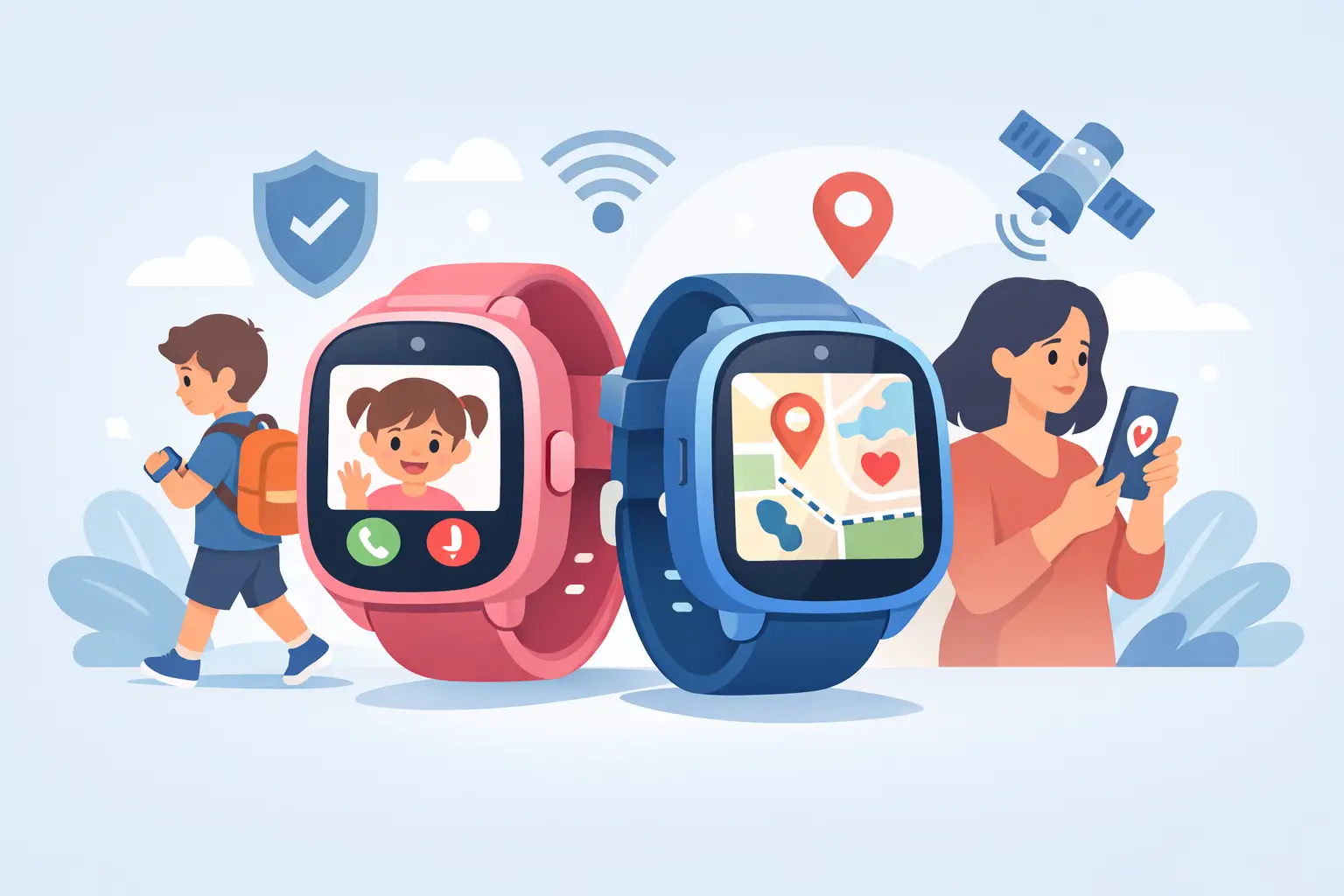
The sales pitch is easy to understand: a smartwatch lets your child call you, you can check their location, and nobody has to hand over a full smartphone quite yet. That is exactly why a review of kids smartwatches safety matters. These devices can offer real peace of mind, but they also bring the usual tech trade-offs – privacy, distraction, data sharing and the risk of giving a child more independence than they are ready to manage.
For most families, the question is not whether smartwatches are good or bad. It is whether a particular watch is safe enough, simple enough and age-appropriate for your child. That depends less on flashy features and more on what sits behind them.
Review of kids smartwatches safety: what actually matters
Parents often get pulled towards GPS, video calling and cute reward systems. Those features are not irrelevant, but safety starts elsewhere. You want to know who can contact your child, what data the watch collects, how accurate the location tracking is, and whether the watch encourages healthy use rather than constant checking.
A watch with ten features is not automatically safer than one with three. In many cases, the safest option is the one that does a small number of jobs well – calling approved contacts, sharing a reliable location and sending a simple SOS alert.
It also helps to separate parental reassurance from child safety. Some products are excellent at helping adults feel connected, but not especially good at protecting a child in a real-world situation. If GPS is patchy, the battery dies by mid-afternoon or the child finds the watch annoying and stops wearing it, the safety promise falls apart quickly.
The main safety benefits of kids smartwatches
There is a reason these watches keep turning up on family shopping lists. Used well, they can solve a genuine parenting problem.
For younger primary-aged children, a smartwatch can create a middle ground between no contact and full phone access. A child walking home from school, moving between divorced households or staying with grandparents can check in without carrying an expensive device that opens the door to apps, browsers and social media.
Location tracking can also be useful, especially for children who are building independence slowly. If your child is going to the park with a friend or heading to an after-school club, knowing roughly where they are can reduce some of the mental load. Keyword there: roughly. GPS on consumer devices is rarely perfect, especially indoors or in built-up areas.
There is also a behavioural upside for some families. A basic watch can help teach communication habits – answering Mum or Dad, sticking to agreed routes, checking in after school – without launching a whole smartphone debate years early.
Where the real risks sit
The biggest safety concerns are not always the ones advertised on the box. They usually sit in privacy, security and overconfidence.
Data privacy is the first red flag
Many kids smartwatches collect location data, voice data, contact lists and usage information. That is sensitive information about a child. If the company is vague about where data is stored, how long it is kept or who it is shared with, that should give you pause.
Parents often focus on whether strangers can contact the watch, which is fair. But the less visible issue is whether the manufacturer itself is handling your child’s data responsibly. If the privacy policy is hard to find, hard to understand or clearly written for adults buying fitness gadgets rather than children’s products, treat that as a warning sign.
Security can be patchy on cheaper devices
Budget watches can look good value until you realise the app is unreliable, passwords are weak or software updates are rare. A connected device is only as safe as the system behind it. If the watch runs through an app with poor reviews about hacking, login problems or unexplained location errors, do not assume those are minor annoyances.
With children’s tech, poor security is not a technical issue. It is a family safety issue.
Location tracking can create false reassurance
A map pin is not the same as supervision. GPS can lag, drift or fail. Some watches fall back on Wi-Fi or mobile network data, which can be less accurate. That means a parent may think a child is safely at school when the watch simply has not updated.
This matters because smartwatches can tempt families into relaxing routines too quickly. If your child is not ready to manage the route, the social pressure or the unexpected hiccup of daily travel, a watch does not solve that.
School and social issues are easy to underestimate
Some schools ban smartwatches or require them to stay in bags during the day. Others allow them but find they become a distraction in class, on the playground or during sports. There is also the social side. A child wearing a feature-packed watch may feel grown-up, but they may also become the centre of unwanted attention, comparison or playground arguments.
If the watch includes a camera or voice messaging, the risk increases. At that point, you are no longer only managing safety. You are managing early digital behaviour.
How to assess smartwatch safety before you buy
A sensible review of kids smartwatches safety starts with your child, not the product page. Ask what problem you are trying to solve. Do you need a way to call after school? A backup for a child with additional needs? More confidence on short independent journeys? Or are you feeling pressure because other children already have one?
Once you know the job the watch needs to do, look closely at these areas.
Contact controls
The best watches limit communication to an approved contact list managed by the parent. If anyone can call the watch, or if adding contacts is too easy, skip it.
Battery life
A safety device that runs out by 3 pm is not a safety device. Look for realistic battery performance, not best-case claims. Video calling, live tracking and games all drain power faster.
App quality
The parent app should be simple, stable and clear about permissions. If families report constant glitches, inaccurate maps or delayed notifications, believe them.
Privacy policy and updates
Look for plain information on data collection, storage and deletion. Regular software updates are a good sign that the company is maintaining the product rather than abandoning it after launch.
Build quality and comfort
Children do not wear uncomfortable tech for long. A watch that is too bulky, fiddly or fragile will end up in a drawer. Water resistance helps, but so does a strap your child can fasten properly.
Age matters more than marketing
A lot of smartwatches are marketed to children in a very broad age band, but a six-year-old and a ten-year-old do not use tech in the same way.
For younger children, simpler is nearly always better. A watch that allows calls to parents and carers, basic location sharing and an SOS function may be plenty. They do not need games, social features or cameras to get the core benefit.
For older primary children, the conversation shifts slightly. They may use the watch more independently, which means rules matter more. When can they message? Is it worn at school? What happens if they lose it? Are they allowed to remove it? This is where parents need to be honest about readiness. Tech confidence is not the same as emotional maturity.
What to say to your child before they wear it
This part matters as much as the settings. A smartwatch should come with a short, plain-language conversation, not just a charger and a wrist strap.
You might say: “This watch is for keeping in touch and helping us know you are safe. It is not for playing with in class, showing off to friends or answering people we have not approved. If something feels odd, you tell me straight away.”
Keep it calm and specific. Children respond better to clear rules than vague warnings. If your child is old enough, explain privacy in simple terms too: “The watch knows where you are, so we only use apps and settings we trust.”
When a kids smartwatch is not the right choice
Sometimes the safest decision is waiting. If your child loses everything, ignores routines, panics when plans change or is likely to treat the watch like a toy, it may create more problems than it solves.
It may also be the wrong fit if you are hoping the watch will compensate for a situation that needs adult support instead. A child who feels unsafe walking home, struggles socially, or is not yet ready for solo transitions needs scaffolding first. Tech can support that process, but it cannot replace it.
For some families, a very basic mobile phone used only for key transitions is actually the cleaner option. Less tracking, fewer moving parts, less novelty.
The best test is simple: if the watch disappeared tomorrow, would your safety plan still make sense? If the answer is no, the device is doing too much heavy lifting.
A good kids smartwatch can be useful, reassuring and completely workable for family life. But the safest one is not the one with the longest feature list. It is the one that fits your child, protects their data, works reliably when needed and sits inside clear family rules you can actually maintain.