

In this article
That moment when you are trying to look normal in a meeting while your stomach is doing laps is brutal. If you are searching for how to manage morning sickness at work, you probably do not need fluffy reassurance. You need ways to get through the commute, the desk day, the smells, the deadlines, and the awkward question of whether to tell anyone yet.
The good news is that morning sickness at work is common, even if it can feel strangely isolating. The less cheerful truth is that there is no one fix. What helps depends on when your nausea hits, what your job involves, and whether you are dealing with mild queasiness or frequent vomiting. The aim is not to be heroic. It is to reduce the load enough that work feels manageable.
How to manage morning sickness at work without white-knuckling it
Start by lowering the stakes. Many people try to push through nausea the way they would push through tiredness or a headache. That usually backfires. An empty stomach, overheating, strong smells, dehydration, and stress can all make symptoms worse. Small changes, made early, often work better than waiting until you feel dreadful.
Think about your day in sections. The commute, the first two hours, lunchtime, late afternoon, and the journey home may each need a different strategy. A teacher on playground duty, a nurse on shift, and an office worker on video calls are not dealing with the same triggers. Give yourself permission to solve the version of the problem you actually have.
Sort the morning before work starts
For a lot of people, the hardest part is not the office. It is getting there. If your nausea hits before you are even dressed, try eating something plain before you get out of bed. Dry toast, crackers, plain biscuits, or cereal can help settle an empty stomach. Keeping a snack by the bed sounds basic, but it can make the difference between manageable nausea and a rough start.
Leave more time than usual. Rushing tends to make queasiness worse, and panic on top of nausea is a miserable combination. If your commute is difficult, see whether you can shift your start time slightly, work from home on tougher days, or travel at a quieter time. Not every workplace can offer that, but many managers are more flexible than people expect, especially if the request is temporary and clear.
If smells trigger you, avoid getting ready near strong fragrances, coffee, hot food, or cleaning products. Even your usual shampoo or deodorant may suddenly feel unbearable. Pregnancy can make familiar scents seem aggressive overnight.
Keep your stomach from getting too empty
One of the most useful rules for morning sickness is also one of the most annoying when you are busy: do not let yourself get too hungry. A large meal may sound unappealing, but going hours without eating can make nausea spike.
This is where planning matters. Keep small, bland, easy-to-tolerate snacks within reach rather than relying on a lunch break that may arrive too late. Crackers, oatcakes, pretzels, dry cereal, bananas, plain yoghurt, nuts if you tolerate them, or a simple sandwich often work better than rich or greasy foods. Some people do better with cold foods because they smell less.
Try not to think in terms of breakfast, lunch, and dinner only. Think mini top-ups. A few bites every couple of hours may keep your stomach steadier than trying to force down a proper meal when you already feel sick.
Drink, but do it strategically
Staying hydrated matters, but gulping water can make some people feel worse. Small sips through the day are often easier than a big bottle all at once. Cold water, sparkling water, watered-down squash, or ginger or peppermint tea can help, though not everyone gets relief from ginger. It depends on the person.
If plain water suddenly tastes awful, that is not unusual. Try ice, lemon, or a different temperature. The aim is fluids you can actually tolerate, not a perfect hydration routine.
Practical changes that can make workdays easier
Morning sickness is hard enough on its own. The workplace can pile on extra triggers: overheated rooms, perfume, shared kitchens, long meetings, and no easy access to a loo. You may not be able to control all of that, but you can often control more than you think.
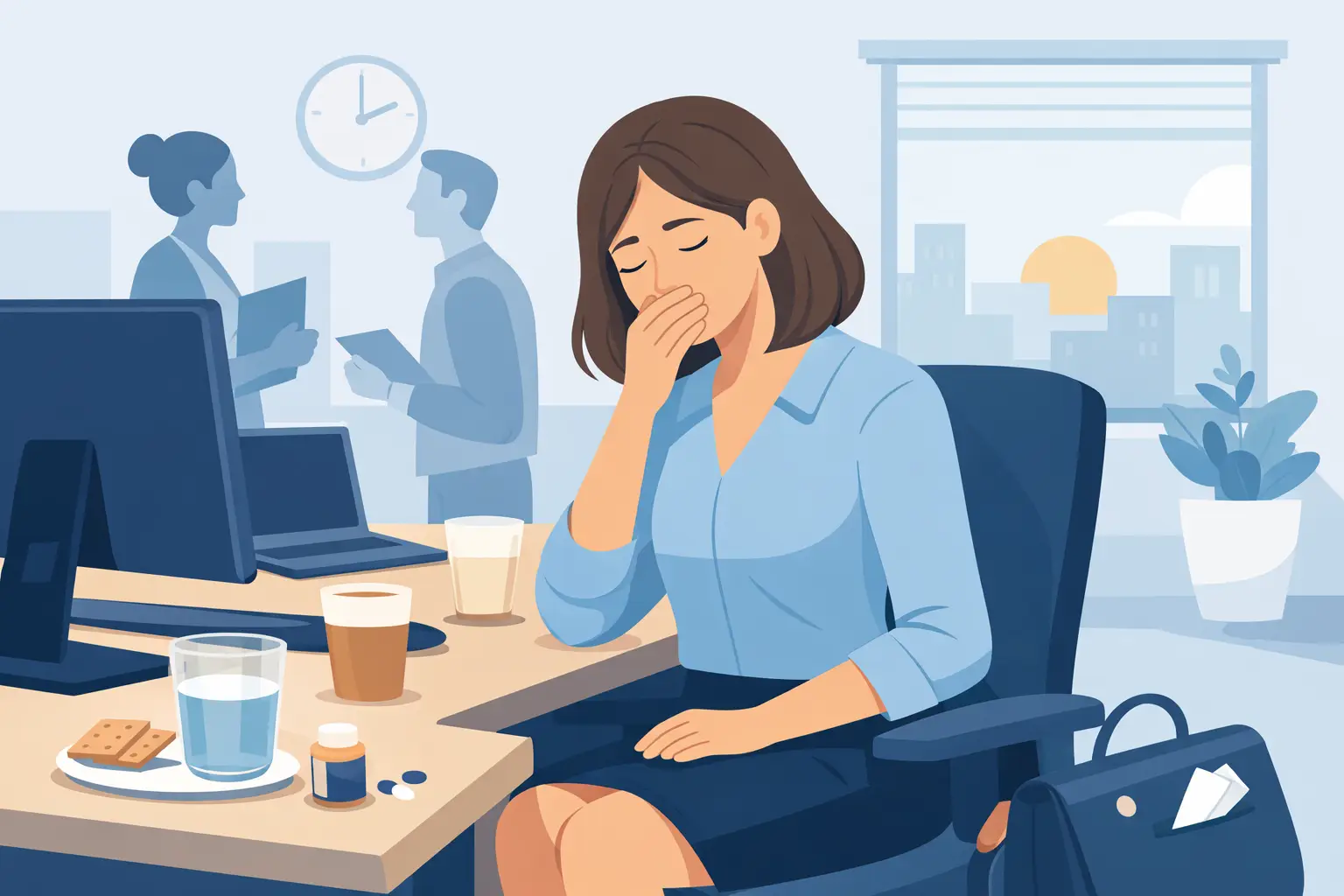
If possible, adjust your environment. Open a window, use a desk fan, sit near fresh air, or move away from food smells. Keep mints, tissues, a toothbrush, and a spare top in your bag or drawer. That is not pessimistic. It is sensible.
Meetings are a common problem area. If your nausea is worst at a certain time, avoid booking important calls then where you can. Keep a plain snack and water nearby. If video calls are easier because you can mute, turn the camera off briefly, or step away, use that option without guilt.
For jobs where breaks are harder to control, it helps to be direct. You do not need to give a full medical monologue. You may simply need the ability to keep a water bottle nearby, eat small snacks, step out briefly, or swap one task that involves strong smells.
If you need to tell your manager
A lot of people are trying to manage symptoms before they have announced the pregnancy. That can feel awkward, but you do not have to choose between silence and telling the whole office. You can share information on a need-to-know basis.
If your symptoms are affecting attendance, punctuality, breaks, or your ability to do certain tasks, it is usually worth telling your manager early. Keep it simple and practical. Explain that you are pregnant, experiencing nausea, and may need temporary adjustments. Focus on what would help you keep working safely and effectively.
You could say: “I’m in early pregnancy and dealing with quite a bit of nausea. I’m still able to work, but I may need a bit of flexibility with breaks and start times over the next few weeks.”
If your job includes physical strain, driving, food handling, exposure to chemicals, or long periods without access to toilets or water, this conversation matters even more. Support is not a favour. It is part of making work workable.
What helps when the nausea suddenly hits
Sometimes all the planning in the world does not stop that wave of sickness arriving out of nowhere. In that moment, the goal is to calm your body enough to get through the next ten minutes.
Stop what you are doing if you can. Sip water. Eat a plain snack if your stomach is empty. Get to fresh air. Loosen tight clothing. Sit upright rather than hunching over your desk. If smells are the issue, move away fast rather than trying to endure it politely.
Some people find acupressure wrist bands helpful. Others swear by ginger sweets or peppermint, while some cannot stand either once pregnant. This is very much trial and error. If something worked last week and now makes you feel worse, that is frustrating but normal.
And if you are sick at work, try not to spiral into embarrassment. It feels awful, but it is a health issue, not a personal failure. Clean up, reset, and use whatever support is available.
When morning sickness at work is more than “just nausea”
There is a point where this stops being a matter of office hacks and becomes a medical issue. If you cannot keep food or fluids down, are losing weight, feel faint, are weeing less, have dark urine, or symptoms are severe enough that you cannot function, speak to your GP or midwife. Severe pregnancy sickness needs proper assessment.
This is especially important if work is masking how bad things have become. Plenty of people minimise symptoms because they are trying to stay productive. If you are barely getting through the day and then collapsing at home, that still counts as not coping.
You may need medication, time off, or a clearer workplace plan. There is no prize for becoming unwell in silence.
Give yourself a shorter horizon
One reason morning sickness at work feels so overwhelming is that people imagine months of surviving each day like this. Usually, it helps to shrink the timeframe. Ask what will make tomorrow 10 per cent easier, not how to become your usual self immediately.
That might mean packing snacks the night before, moving one meeting, telling one trusted manager, changing your commute, or giving up on the idea that lunch has to be healthy and impressive. For now, “edible and tolerated” is good enough.
If you are carrying the usual mental load at home as well, this stage can feel relentless. Lower standards where you can. Buy the easier dinner. Sit down more. Let someone else do a school run or bedtime if that is available to you. Work may be the visible part of the struggle, but the hidden part is often what tips people over.
You do not need a perfect plan. You need a few realistic moves that protect your energy, reduce triggers, and help you get through the day with a bit less dread. Some weeks will still be hard. But small adjustments, made early, can turn survival mode into something more manageable – and that counts for a lot.