

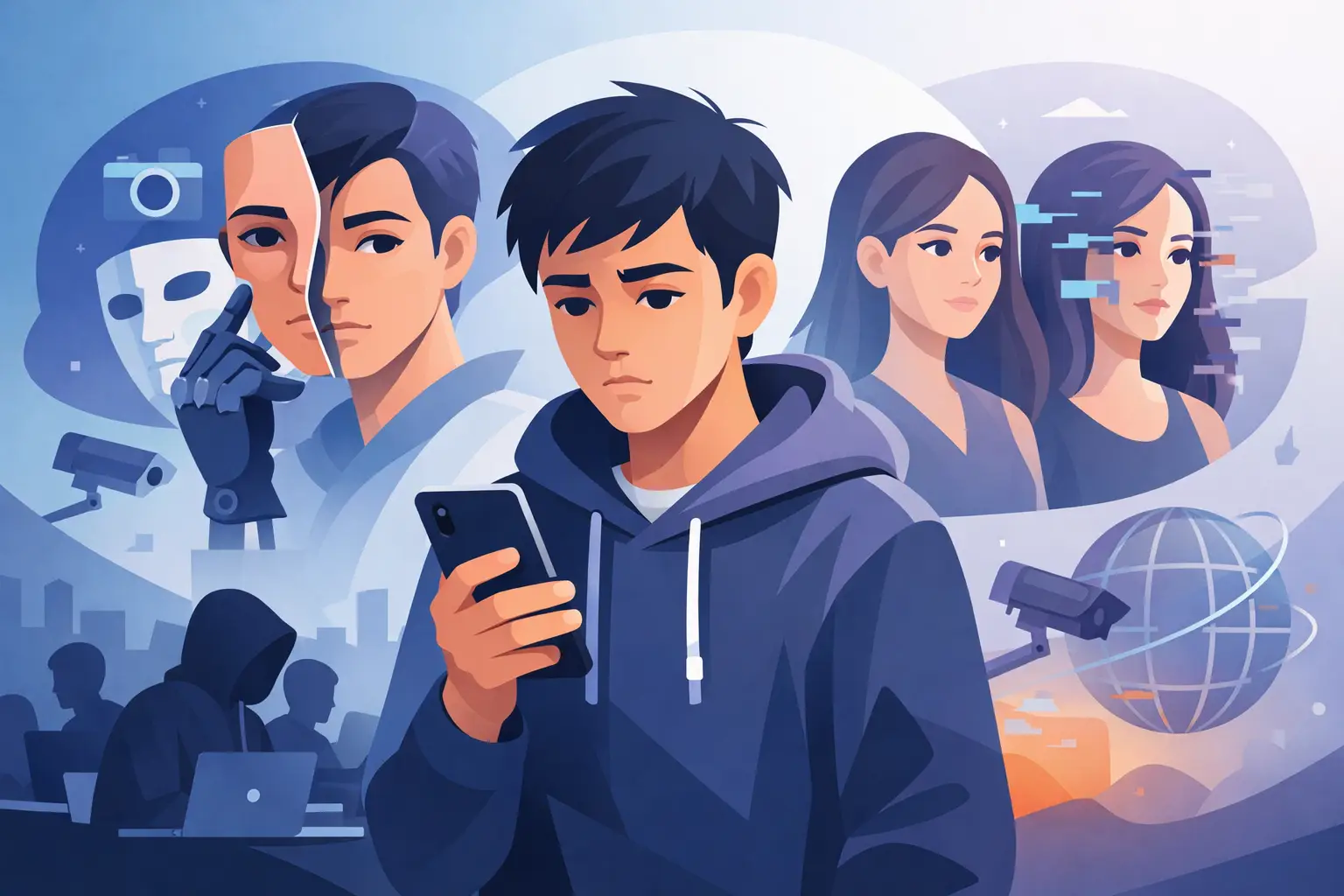
A fake nude made from a school photo used to require technical skill. Now it can be made in minutes, shared in a group chat, and seen by half a year group before a teen has even finished maths.
That is what makes deepfakes different from older online risks. The damage can be fast, believable and deeply personal. For parents, the hard part is that this is not just about “stranger danger” online. The future risks of deepfakes for teenagers sit much closer to home – classmates, ex-partners, friendship groups, gaming communities and ordinary photos already sitting on mobile phones.
The good news is that panic does not help, but preparation does. Parents do not need to become AI experts. They do need a clear picture of what may be coming, how it could affect teenagers differently from adults, and what conversations are worth having now.
Why the future risks of deepfakes for teenagers are different
Teenagers are in a life stage where identity, reputation and belonging matter enormously. Adults can be harmed by fake content too, but many teens are still building the emotional skills to cope with humiliation, conflict and social fallout. A manipulated video or image can hit right at the centre of who they think they are and how they are seen.
There is also a practical problem. Teens live in highly networked social spaces where content spreads quickly and social proof matters. If a fake appears in a school chat, on Snapchat, in a Discord server or on a fake TikTok account, the first reaction is often not careful analysis. It is shock, gossip and screenshots.
Deepfakes also muddy a line teenagers already struggle with: what is real, what is performative and what can be trusted. That confusion creates two risks at once. Real harm can be dismissed as “probably fake”, while fake material can be treated as real because it looks convincing enough.
The biggest future risks of deepfakes for teenagers
Sexualised fake images and coercion
This is likely to be the risk many parents hear about first, and for good reason. A teenager does not need to have sent a nude for sexualised fake images to be made. A face taken from Instagram, a school sports photo or a family Facebook post can be enough for someone to create humiliating content.
For girls, this risk is often tied to sexual harassment, reputation damage and public shaming. For boys, it may be wrapped in banter or dares, which can make adults underestimate the harm. Either way, the emotional impact can be severe. Shame, withdrawal, panic and refusal to attend school are common reactions when a teen feels their body or image is no longer under their control.
The next layer of risk is coercion. Once fake sexual content exists, it can be used for sextortion, threats or pressure to send “real” images. A teen may be told, “Everyone already thinks this is you, so you might as well send the actual photo.” That is manipulation, and teens need help recognising it quickly.
Bullying that feels impossible to escape
Deepfake bullying can be more invasive than ordinary teasing because it gives bullies a visual weapon. It is one thing for someone to spread a rumour. It is another to attach that rumour to a fake voice note, altered image or edited clip that appears to prove it.
A teenager could be made to look racist, sexually explicit, drunk, cruel to a friend or abusive to a teacher. The point is not always to fool every single person forever. Often it is enough to create doubt, embarrassment and a running joke that sticks.
This matters because teens often tell parents, “It was just online,” while living with the consequences at school, on the bus, in sports clubs and in friendship circles. Digital harm rarely stays digital.
Scams and impersonation
As voice cloning improves, teenagers may become targets in ways families have not fully clocked yet. A scammer could copy a teen’s voice from videos and use it to message friends, ask for money or manipulate grandparents. A fake account that sounds and looks like a real teenager could be used to get private information, images or access to group chats.
Some teens will also be pulled into creating or sharing this material themselves. That does not make them “bad kids”. It means the tools are becoming cheap, easy and normalised. The line between prank, crime and abuse can be blurry to adolescents whose brains are still developing, especially when peers are egging them on.
Reputation damage that lasts longer than school
Parents sometimes assume teenage drama burns out quickly. Sometimes it does. But the next wave of deepfake risk is persistence. Fake content can be reposted, archived, screen-recorded and resurfaced months or years later.
That can affect college applications, first jobs, sports teams, relationships and mental health. Even when a fake is disproved, a teen may still carry the stress of knowing it existed, was seen and may reappear. The internet does not always care that something was false.
Erosion of trust
One of the quieter risks is that deepfakes teach teenagers not to trust what they see or hear. That sounds sensible at first, but taken too far it becomes corrosive. If every clip can be called fake, accountability gets weaker. If every denial sounds plausible, victims may not be believed.
For teenagers already navigating consent, dating, conflict and social hierarchy, that can create a very messy world. “I didn’t say that.” “That video isn’t real.” “You can’t prove it.” Sometimes those statements will be true. Sometimes they will be tactical. Teens need better instincts than blind belief or blanket scepticism.
What makes some teenagers more vulnerable
Not every teen faces the same level of risk. Young people who post frequently, have public accounts or are heavily invested in online status may have more exposure simply because there is more material to use. Teenagers dealing with social exclusion, friendship drama, break-ups or controlling relationships can also be at higher risk.
Neurodivergent teens, younger teens and those with low confidence may find it harder to spot manipulation or ask for help early. And if a child already feels they will lose their mobile phone or get blamed, they are much less likely to come forward when something goes wrong.
That is why the family response matters so much. A teen who expects calm support will tell you more than a teen who expects a lecture.
What parents can do now
The most useful approach is boringly practical. Start with the photos and videos already out there. Help your teen review privacy settings, trim public content where possible and think twice about what is posted openly. This will not eliminate the risk, but it can reduce the amount of material strangers or peers can scrape.
Next, talk about deepfakes before there is a crisis. Not as a dramatic speech, but as part of wider digital safety conversations you may already be having about sextortion, porn, gossip and consent. You are aiming for recognition, not fear.
You could say, “People can now fake images, videos and voices pretty convincingly. If anything like that ever involves you or one of your friends, I need you to tell me quickly. You will not be in trouble for coming to me.”
That last sentence matters. Many teens stay silent because they think adults will focus on the wrong question, such as why they posted a selfie, were in that group chat or trusted the wrong person. Shame delays action, and delay usually makes digital harm worse.
It also helps to give teenagers a simple response plan. If fake content appears, do not argue in the comments, do not keep forwarding it and do not negotiate privately with the person threatening them. Save evidence, report it on the platform, tell school if peers are involved, and involve police if there are sexual images, blackmail or threats.
For some families, a written plan stuck on the fridge may sound over the top. For anxious teens, it can be grounding. When adrenaline is high, scripts are useful.
What to say if your teen is targeted
If your child comes to you in tears, start with containment. “I believe you.” “We will handle this step by step.” “This is not your fault.” Those phrases may feel small, but they reduce panic and stop your teen spiralling into self-blame.
Then move into action. Ask what was shared, where it appeared, who has seen it and whether anyone is making threats. Take screenshots, record usernames and dates, and avoid contacting the other child or parent in anger until you understand the situation clearly. Schools and platforms respond better to specific evidence than to general outrage.
If the fake is sexual, treat it urgently even if your teen says it is “just AI”. Sexualised abuse is still abuse when the image is fabricated.
The goal is not perfect control
No parent can future-proof a teenager against every new digital threat. The tools will keep changing. Some platforms will respond well, some badly. Some schools will understand immediately, others will need pushing.
What does help is building a family culture where image-based abuse, coercion and online humiliation are named clearly and taken seriously. Teens do not need parents who know every app. They need parents who can stay calm, spot the pattern and act fast.
If this topic is already on your mind, that is not overreacting. It is good parenting. The families who cope best with emerging tech risks are usually not the strictest or the most tech-savvy. They are the ones where a teenager knows, even in a mess like this, “I can still go home and tell someone.”