

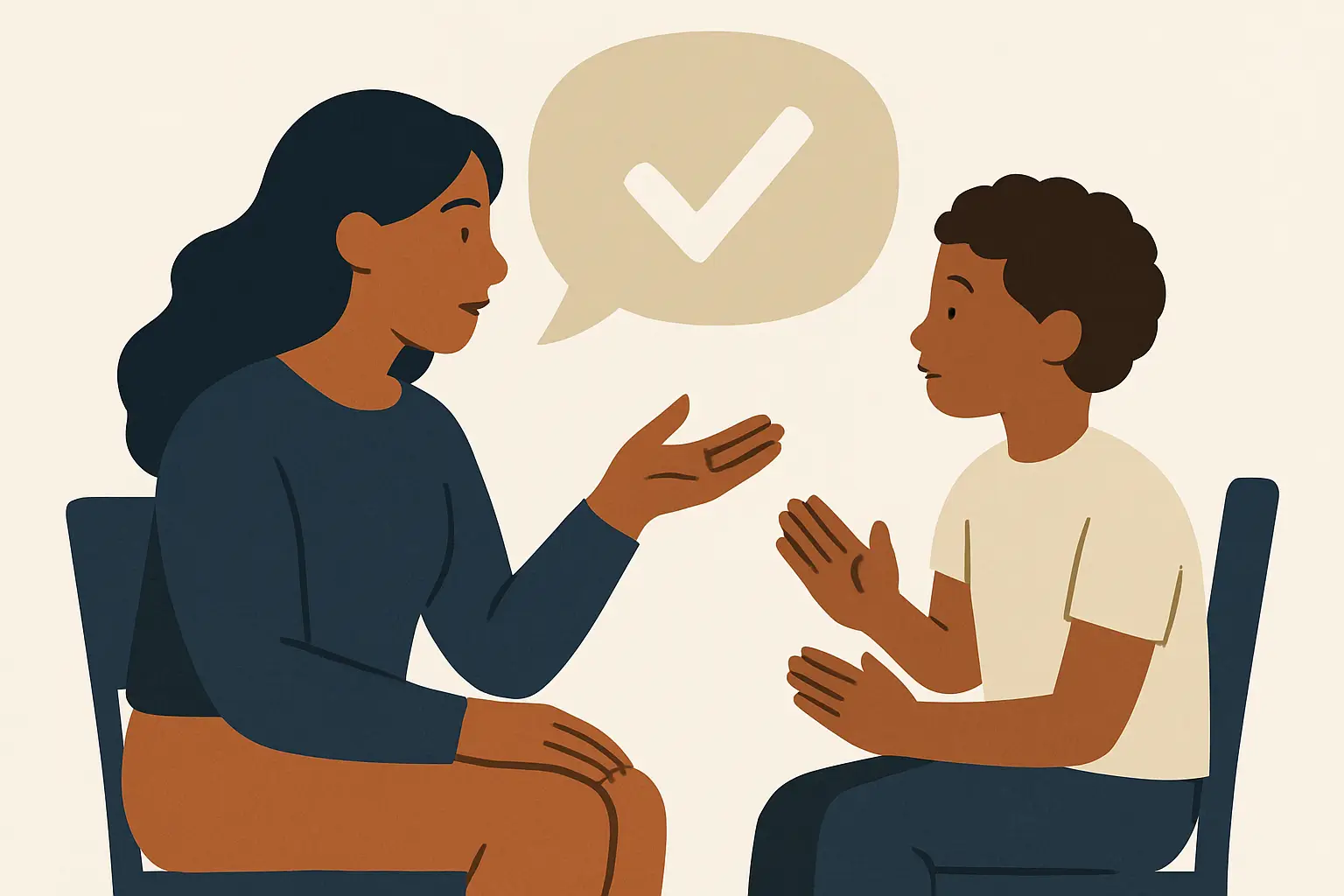
You know that moment when your child grabs a toy from another kid, or launches themselves at a relative for a hug, or tells you they do not want to kiss Granny goodbye – and everyone’s looking at you for the “right” response?
That’s consent. Not the abstract, awkward, teen-only version. The everyday, family-life version that starts long before puberty and keeps mattering long after.
This guide to talking about consent with kids is designed for real households: busy mornings, sticky-fingered toddlers, siblings who wind each other up, and school-aged kids who are learning the social rules at speed. You do not need a perfect speech. You need repeatable language, consistent boundaries, and a willingness to practise.
What consent actually means for children
For kids, consent is the skill of noticing and respecting boundaries – theirs and other people’s. It’s being able to say yes, no, not now, or stop, and knowing that those words will be listened to. It’s also learning that you cannot insist on someone else’s body, space, time, or attention.
A useful frame is: consent is an ongoing agreement that can change. That applies to tickles, games, borrowing things, taking photos, roughhousing, sharing secrets, even “play fighting”.
There is a trade-off here. If you only talk about consent as “always ask first”, you can raise kids who freeze in real-time social moments, or who think a scripted “Can I…?” covers everything. On the other hand, if you only teach “be nice” and “share”, you can raise kids who feel responsible for other people’s feelings and struggle to say no. The sweet spot is teaching both respect and autonomy.
Start with the situations you already have
Consent talks land best when they are attached to something that just happened. Children learn through patterns, not lectures.
Think about the hot spots in most homes: tickling that goes too far, siblings in each other’s rooms, friends grabbing phones, kids climbing onto adults who are eating or working, and relatives expecting affection. Each is an opportunity to practise clear language.
When you correct behaviour, keep it short and specific. Aim for: name what you saw, set the boundary, offer a better option.
A guide to talking about consent with kids by age
Different ages need different words. The principles stay the same, but the delivery changes.
Toddlers and pre-schoolers (2-4): make it concrete
This age is all impulse and big feelings. You are not trying to build deep empathy in one go. You are building a habit: stop when someone says stop.
Use simple phrases and repeat them often.
“Stop means stop.”
“Hands are for helping, not grabbing.”
“Let’s ask: ‘Can I have a turn?’”
For physical play, narrate consent like it’s part of the game. “Do you want tickles?” Pause. “More tickles?” Pause again. If they say no, you stop instantly, even if you think they’re being silly. That immediate follow-through is the lesson.
If your toddler is the one saying no, back them up kindly but firmly. If they do not want a hug, try: “You don’t have to hug. You can wave or high-five.” You are teaching them their body is theirs, without making it a drama.
Early primary (5-7): add body rules and privacy
Kids this age can understand basic body autonomy and personal space. They are also playing more with peers, which means more touching, more dares, and more social pressure.
Introduce simple “body rules” that are not fear-based.
“Private parts are private.”
“No one should ask to see or touch your private parts, and you don’t touch other people’s.”
“If a game feels yuck or confusing, you can leave and tell an adult.”
Avoid “good touch/bad touch” as your main framework. It can backfire because some unwanted touch is framed as a joke (tickling), and some abusive touch may not feel painful. Instead, use “wanted/unwanted” and “okay/not okay”.
A useful script for them is: “Stop. I don’t like that.” Practise it at home so it is easier to use at school.
Later primary (8-10): build nuance and peer situations
This is where consent becomes less about parental control and more about social navigation. Kids are experimenting with jokes, sarcasm, secrets, and group dynamics. They may also start encountering sexualised content accidentally online.
Talk about consent as a two-way check-in. “You don’t just look for a ‘yes’. You look for a comfortable yes.” If someone is quiet, moving away, or looks upset, you pause.
Bring it into everyday tech life too. Ask: “Can I take a photo?” and “Can I post this?” Teach them that consent includes images and messages, not just touch.
It also helps to name the grey areas. For example: borrowing someone’s football without asking is not the same as hitting, but it is still crossing a boundary. Consent is about respect, not just safety.
Tweens and teens (11-16+): connect consent to relationships and digital life
By now, the question is not whether your teen has heard of consent. It’s whether they can apply it under pressure – flirting, parties, alcohol, porn culture, group chats, and the very real fear of social embarrassment.
You can be plain: “Consent is required every time, and it can be withdrawn at any time. If someone is drunk, high, asleep, or scared to say no, it’s not consent.”
Also name what consent is not: it’s not “they didn’t push me away”, it’s not “we’ve done it before”, and it’s not “they sent pics so they owe me”.
Digital consent deserves its own lane. Talk about nudes, sexting, and forwarding. A simple, firm family line helps: “If someone sends you an intimate image, you do not share it. You come to me. We will handle it.” Your teen needs to know you’ll be calm enough to help.
If you want a local-feeling resource hub for these bigger conversations, Kiwi Families is built around exactly this sort of stage-based, script-ready parenting support.
What to say: scripts you can actually use
You do not need to be eloquent. You need to be consistent.
For unwanted touch in play: “I heard ‘stop’. Stop straight away. You can ask if they want to keep playing.”
For kids who struggle to stop when excited: “Your body wants to keep going, but their words said no. Take a breath. Try again with a different game.”
For greetings with relatives: “You can choose: hug, high-five, fist bump, wave, or hello from here.”
For respecting privacy: “Knock, wait, then come in. Everyone gets privacy, even kids.”
For sharing and borrowing: “It’s their thing. Ask first. If they say no, you move on.”
For when your child feels guilty saying no: “You are allowed to say no kindly. Their disappointment is not your job to fix.”
When consent gets messy: common scenarios
Rough play between siblings
Some siblings genuinely love wrestling. The goal is not to ban it automatically, but to make it safe. Set house rules like: ask before you start, no head/neck contact, and any “stop” ends the game immediately.
If one child often ends up upset, that is your data. It might mean the power balance is off, the game is too intense, or one child is using “play” to dominate. In that case, you step in sooner and reset.
Kids who ignore “no”
This is common, especially with younger kids who are impulsive or sensory-seeking. It does not mean they are “bad”. It means they need coaching and consequences.
Correct the behaviour, then practise the alternative. “You wanted a cuddle. Next time, ask: ‘Can I have a cuddle?’ If they say no, you can squeeze a cushion or ask me.” If it keeps happening, you separate them from the situation. Consent without follow-through is just a nice idea.
Adults who push affection
This is where many parents wobble, because it feels rude to push back. But you are not raising a child to be polite at all costs. You are raising a child who trusts their own boundaries.
Try a calm line: “We’re teaching body autonomy. They’ll say hello in their own way.” Most people will adapt once you set the norm.
Neurodiversity and consent
For some children, reading body language is harder. That makes explicit consent language even more useful, not less. Teach clear asking, clear stopping, and clear alternatives.
It may also mean you coach other kids and adults around them: “If you don’t want a hug, say ‘no thank you’ and step back.” Consent is a community skill, not just a rule for one child.
How to build a family culture of consent
The fastest way to make consent normal is to model it when you have the power.
Ask before you post a photo. Respect bathroom privacy. Knock before entering rooms. Notice when your child says “no” to something reasonable and honour it, even if it is inconvenient. And when you cannot honour it (seatbelts, medicine, leaving the park), say so plainly: “You don’t want to go. I hear you. We’re going anyway because safety.”
That honesty matters. Kids can tolerate limits. What erodes trust is pretending there is a choice when there isn’t.
Also, apologise when you get it wrong. “I kept tickling after you said stop. I’m sorry. I’ll stop next time.” This is powerful. It teaches them that consent applies to adults too, and that repair is normal.
The closing thought to keep in your pocket is this: you’re not trying to script every future scenario. You’re giving your child a default setting – that their voice counts, other people’s boundaries matter, and it’s always okay to pause and check.