

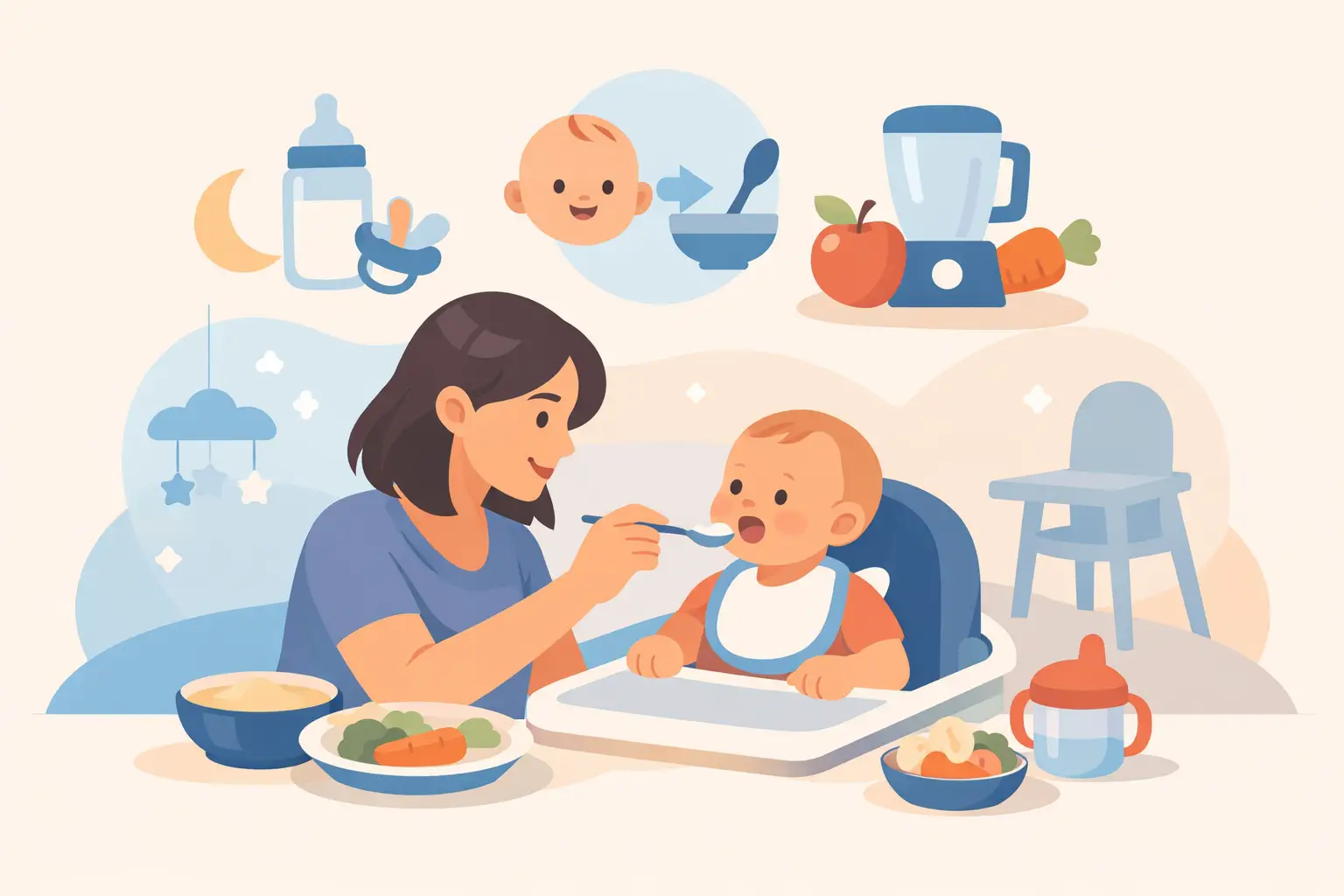
That first spoonful can feel oddly high-stakes. One minute you are timing feeds and sterilising bottles, the next you are wondering whether mashed avocado counts as lunch and why half of it is now in your baby’s eyebrow. This guide to weaning a baby at six months is here to make that jump feel manageable, not perfect.
Weaning does not need a gourmet plan, a cupboard full of tiny jars, or a strict feeding schedule from day one. At six months, your baby is still getting most of their nutrition from breast milk or formula. Solids are about learning – how food feels, how to move it around the mouth, how to swallow, and how to join in with family meals over time.
When to start weaning at six months
Six months is the recommended age to start solid foods for most babies. Before then, their digestive system and swallowing skills may not be ready. Waiting until around six months also gives your baby a better chance of sitting upright, grasping food, and managing lumps safely.
That said, go by readiness as well as the calendar. A baby who is ready for weaning will usually be able to stay sitting with support, hold their head steady, bring toys or hands to their mouth, and show interest in food when other people are eating. If your baby still pushes everything straight back out with their tongue, they may need a little more time.
Hunger alone is not always a sign they are ready for solids. Growth spurts, poor naps, and distraction during milk feeds can all make feeding feel unsettled for a while.
What this guide to weaning a baby at six months looks like in real life
Start small. One meal a day is plenty in the beginning, ideally when your baby is alert and not ravenous. Mid-morning or lunchtime often works better than the end of a long day when everyone is tired.
You can offer smooth mashed food on a spoon, soft finger foods your baby can hold, or a mix of both. There is no single correct method. Some families prefer spoon-feeding because it feels tidier and easier to judge. Others go for baby-led weaning because their baby wants to grab everything independently. Most households end up doing a bit of both, and that is completely fine.
The first goal is exposure, not volume. If your baby eats two teaspoons and then smears the rest across the highchair, that still counts as progress.
Best first foods at six months
Simple foods are easiest to begin with because they let your baby get used to new tastes and textures without too much going on at once. Good options include mashed or soft-cooked vegetables such as carrot, sweet potato, parsnip, pumpkin, courgette, broccoli and cauliflower. Soft fruits like banana, pear, peach, mango and avocado also work well.
You can also offer plain yoghurt, porridge made with their usual milk, well-cooked lentils, mashed beans, soft scrambled egg, and tender shredded meat or chicken. Iron-rich foods matter from around six months because babies’ iron stores start to drop, so include foods such as meat, pulses, fortified cereals and egg regularly.
If you are offering finger foods, make sure they are soft enough to squash easily between your fingers. Think steamed batons of veg, ripe fruit slices, toast fingers, or strips of omelette.
How much should a six-month-old eat?
Less than many parents expect. In the early days, a few spoonfuls or a few bites is enough. Milk remains the main source of calories, so there is no need to push larger portions.
A useful way to think about it is this: offer food, let your baby explore it, and stop when they lose interest. Turning their head away, clamping their mouth shut, throwing food, or getting fussy usually means they are done. Babies are generally good at regulating appetite when we let them.
As the weeks go on, your baby may move from one small meal a day to two, then three. There is no prize for getting there fastest.
Milk feeds still matter
One of the most common worries in the first weeks of weaning is whether solids should replace milk feeds. At six months, the answer is no. Keep offering breast milk or formula as usual.
Some parents give milk first and solids later, especially at the start, to take the pressure off. Others offer solids an hour or so after a milk feed, when baby is interested but not too hungry to cope with something new. Either approach can work. What matters is that milk intake stays steady while your baby learns about food.
If you notice a sudden drop in milk feeds very early on, slow things down and keep solids low-pressure.
Allergens: don’t leave this too late
This bit matters. Common allergens should be introduced from around six months, not delayed for no reason. That includes well-cooked egg, peanut, dairy, wheat, fish and sesame.
Introduce them one at a time in small amounts so it is easier to spot any reaction. You do not need to wait days between every new food, but it helps not to introduce several allergens all at once on the first go. Peanut should be given in a safe form, such as smooth peanut butter thinned with yoghurt or warm water, never as whole nuts.
Signs of an allergic reaction can include swelling, hives, vomiting, coughing, wheezing, or breathing difficulty. Breathing problems need urgent medical help.
Foods and drinks to avoid
A few boundaries make weaning safer. Do not add salt or sugar to your baby’s food. Avoid whole nuts, undercooked eggs, honey before age one, and foods that are obvious choking risks, such as whole grapes, raw apple chunks, popcorn, and large hard pieces of carrot.
Cows’ milk can be used in cooking from six months, but it should not replace breast milk or formula as your baby’s main drink until age one. Water is fine in small sips with meals, offered in an open cup or free-flow beaker.
What gagging looks like, and when to worry
Gagging is common when babies learn to manage textures, especially with finger foods. It can look dramatic – red face, watery eyes, tongue thrusting, coughing – but it is often part of learning. Choking is different. A choking baby may be silent, unable to cough, or struggling to breathe.
That difference is why upright seating matters. Always feed your baby sitting up, never reclined, and stay with them while they eat. Keep food soft, manageable, and age-appropriate.
If feeding anxiety is starting to run the show, that is understandable. Many parents find a paediatric first aid course gives them more confidence around meals.
If your baby refuses solids
Some babies launch straight in. Others treat every spoon like a personal insult. Refusal does not usually mean you have missed your moment.
Keep the pressure low. Offer food once or twice a day, eat alongside your baby when you can, and let them touch, squish and drop food without rushing to wipe every mess. Repeated exposure matters more than instant success. A baby may need many chances with the same food before accepting it.
If your baby gags on all textures, seems very distressed by food, is not gaining weight, or still shows little interest in eating after several weeks, speak to your health visitor or GP.
A simple rhythm for the first few weeks
In week one, aim for one meal a day and keep it easy – perhaps mashed veg, porridge, or soft fruit. In weeks two and three, continue one meal most days and begin adding variety, including iron-rich foods and allergens in safe forms. By weeks four to six, many babies are ready for two meals a day, with more texture and more chances to self-feed.
You do not need a perfect meal planner. You need a rhythm you can actually keep up with.
What to say to yourself when weaning feels messy
If the kitchen looks like a food crime scene and your baby has eaten three spoons of yoghurt all day, you have not failed. Weaning is not a test of how organised you are. It is a learning stage, and learning stages are untidy.
Trust the basics. Offer food regularly. Keep milk feeds going. Make safety non-negotiable. Let progress build slowly.
If you want more practical parenting advice by stage, Kiwi Families has plenty of no-nonsense support. For now, give yourself permission to keep this simple. Your baby does not need perfect plates. They need time, repetition, and a calm adult nearby.