

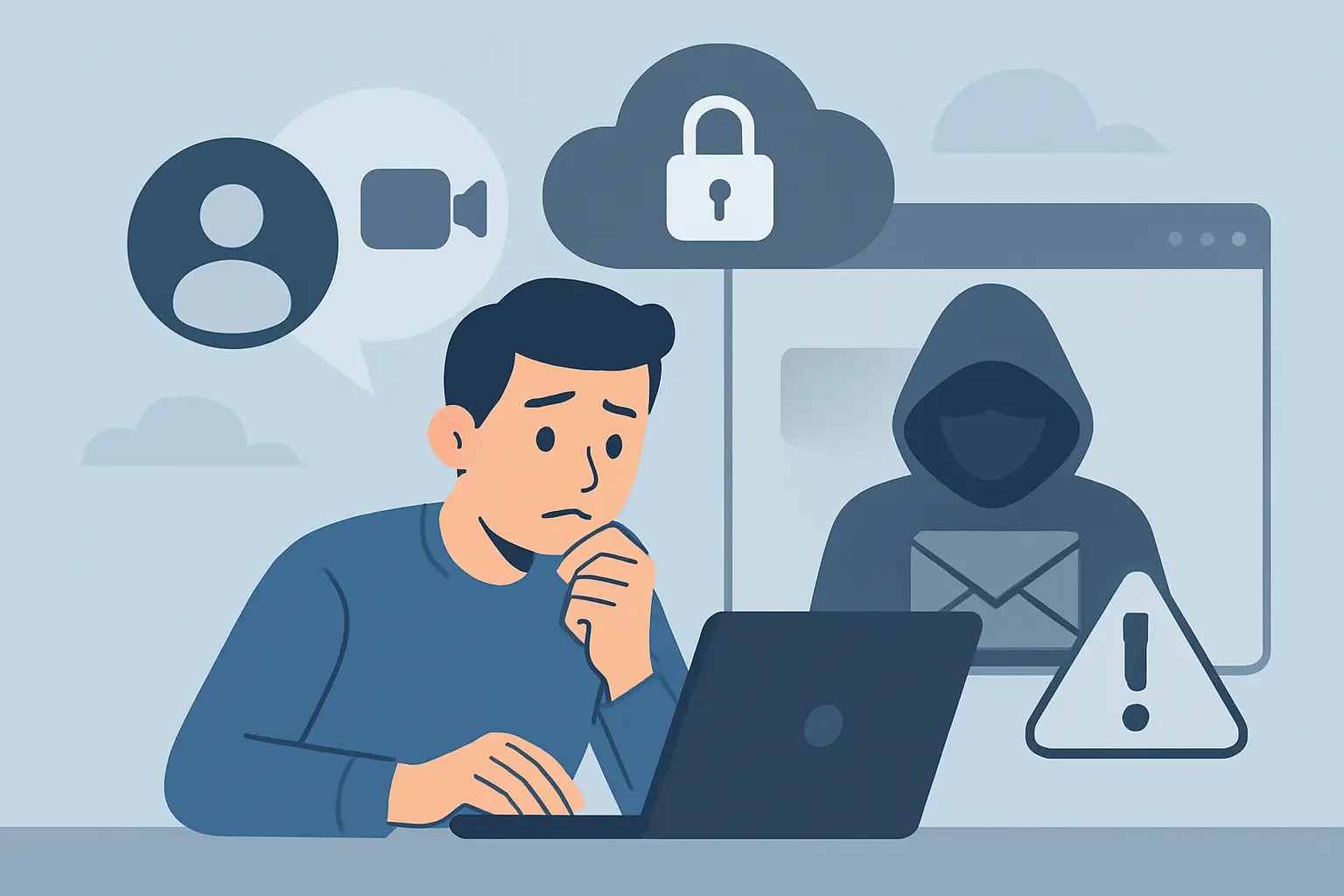
Your child’s mobile phone buzzes at 11:47pm. They go quiet, then suddenly panicky – the kind of panic that has nothing to do with homework or friendship drama. When you ask what’s wrong, they say, “Nothing,” but their hands are shaking.
That is how sextortion often enters a family home – not with a headline, but with a single message that makes a young person feel trapped.
Sextortion is common enough that every parent of a tween or teen should understand it the same way we understand basic road safety. Not because you’re expecting the worst, but because knowing what to do in the first hour can change what happens next.
What is sextortion and what to do – in plain language
Sextortion is when someone threatens to share sexual images, videos, or sexual information unless the victim does what they demand. That demand might be money, more images, a live video call, sexual acts, or access to accounts.
With tweens and teens, it often begins as ordinary online flirting. The person may pretend to be a similar age, use stolen photos, or pose as someone local. Once a sexual image is shared (or sometimes even when it’s faked or fabricated), the pressure ramps up fast.
Sometimes there were no images sent at all. Offenders can use edited screenshots, deepfake-style images, or a claim like “I recorded you on video” to scare a child into complying. The threat works because your child is thinking about humiliation, not logic.
The hard truth: sextortion is not “bad choices” catching up with a kid. It is coercion. It is abuse. And it targets normal adolescent curiosity and vulnerability.
How sextortion typically unfolds
It usually follows a pattern: rapid intimacy, a sexual request, a sudden shift to threats. The offender might start with compliments and private chat, then ask to move to another app, then push for a picture “just between us”.
Once they have something they can weaponise (or something they can convincingly pretend to have), they create urgency: “Pay in the next hour or I send it to your school.” They may show screenshots of your child’s followers, friends, or family to prove they can reach them.
It depends on the scammer and the platform, but many cases escalate quickly because the offender wants to keep your child in a fear loop. If your child has time to breathe and talk to you, the offender loses control.
Signs your child might be a target
Some kids tell a parent immediately. Many don’t. Shame is a powerful silencer, and offenders deliberately say things like “If you tell anyone, I’ll ruin your life.”
You might notice your child guarding their mobile phone, changing passwords, deleting messages, staying up late to respond, or suddenly withdrawing from family routines. You might also see a sudden request for money, gift cards, or payment apps, or panic about social media.
None of these signs prove sextortion, but they’re a strong cue to get curious in a calm, non-accusatory way.
The first 30 minutes: what to do if your child tells you
This is the moment to be the adult nervous system in the room. The goal is safety and control, not a lecture.
Start by saying, plainly, “I’m really glad you told me. You’re not in trouble. We’re going to sort this.” If you can keep your voice steady, you give your child permission to stay with you rather than going back to the offender for relief.
Next, stop the bleeding. Tell your child not to send anything else, not to pay, and not to negotiate. Paying can make things worse because it signals that your family is vulnerable and willing to comply, and demands often continue.
Then preserve evidence. Before anything is deleted, take screenshots of messages, usernames, profile links, payment requests, threats, and any images they’ve sent. Photograph the screen if you need to. Save dates and times. If a platform allows you to download data or chat history, do it. Evidence matters for reporting, and it also helps you stay anchored in facts when fear is shouting.
Finally, involve the right support. If your child is distressed or unsafe, keep them with you. This isn’t a “sleep on it” situation if they’re panicking or talking about self-harm.
What to do next (without making it worse)
Once you’ve got the basics covered, your next moves should reduce reach, tighten accounts, and report.
Start by blocking the offender on the platform, but only after you’ve captured evidence. Then report the account in-app. Most platforms have reporting pathways for sexual exploitation or blackmail.
Change passwords for the accounts involved and switch on two-factor authentication. If your child has shared any passwords (it happens), treat it as a broader security event. Check email accounts first because email is often the key to resetting everything else.
If the offender has your child’s social accounts, review privacy settings together. Make followers private where possible, remove unknown followers, and limit who can message them. This step can feel like “punishment” to a teen, so frame it as a temporary safety lockdown, not a moral judgement.
If any images have been shared or you think they might be, you can also take steps to limit ongoing spread. Some services allow you to create a digital hash of an image to help stop it being uploaded again across participating platforms. Whether that’s available and appropriate depends on where you live and which platforms are involved.
Reporting: who to tell and why it’s worth it
Many parents hesitate to report because they fear their child will be blamed or their mobile phone will be taken away. Offenders rely on that silence.
If your child is under 18, this is a child safety issue. Reporting creates a record and can help protect other kids targeted by the same account.
In the UK, you can report to the police (101 for non-emergency, 999 if there is immediate danger). You can also report to child protection and online safety services, and you can alert your child’s school safeguarding lead if there’s a risk of distribution within the school community. Schools cannot erase content from the internet, but they can reduce harm on the ground – managing gossip, monitoring bullying, and supporting your child’s wellbeing.
It depends on the situation, but if the offender is demanding money, uses threats of immediate distribution, or appears to know your child offline, treat it as higher risk and escalate quickly.
What to say to your child (scripts that actually help)
When your child is spiralling, they don’t need a perfect speech. They need a few clear sentences that cut through shame.
Try: “You’ve been targeted. This is something adults do to manipulate kids. I’m on your side.”
If they’re terrified of exposure: “Even if something gets shared, we will handle it. It will be awful, and it will pass. You won’t be dealing with this alone.”
If they’re blaming themselves: “You might have taken a risk, but the wrongdoing is the blackmail. The responsibility is on the person threatening you.”
If they’re begging to pay: “I get why paying feels like the quickest way to make it stop. In reality, it often buys more demands. We’re going to choose the option that protects you long-term.”
If the images are already out there
This is the part parents dread, so let’s be honest: sometimes offenders do share. Often they don’t, especially when blocked and reported quickly. Their power is in fear, not follow-through.
If sharing happens, focus on harm reduction. Report the content wherever it appears, alert the platform, and document everything. If your child’s name is attached, consider tightening their social footprint for a while. Let the school know early so they can respond fast to harassment.
Do not force your child to do a full confession tour. They need a small circle of safe adults, not a public trial.
Prevention that doesn’t feel like spying
You can reduce risk without turning your home into a surveillance state.
Start with a simple family rule: no one ever has to respond to a sexual request online, and any threat or weird sexual message gets shown to a trusted adult immediately. Make it explicit that they will not lose their mobile phone for telling you. If the “cost” of honesty is punishment, you’ll hear about sextortion last.
Keep conversations practical. Ask what apps their friends use, what “normal” flirting looks like in their year group, and what they’d do if someone asked for a nude. You’re building a muscle memory response, not trying to eliminate all risk.
You can also do a quick tech check together every few months: privacy settings, who can message them, whether accounts are public, and whether two-factor authentication is on. Treat it like checking the smoke alarm.
If you want more stage-based, parent-friendly guidance on teen online safety and hard conversations, Kiwi Families has practical resources at https://www.kiwifamilies.co.nz.
When to worry about mental health
Sextortion can trigger intense anxiety, sleep problems, panic attacks, and in some cases suicidal thoughts. If your child says they can’t cope, talks about not wanting to be here, or seems unusually shut down, treat that as urgent.
Stay close, remove immediate means of self-harm where appropriate, and seek professional support. You do not need to be certain about risk to ask for help. It’s better to overreact to safety than underreact to pride.
A final thought to hold onto
Sextortion tries to convince a child that one image equals a ruined life. Your job is to quietly, repeatedly show them a different truth: fear shrinks when it’s shared with safe adults, and no online threat is bigger than a real-world support system that shows up and stays.