
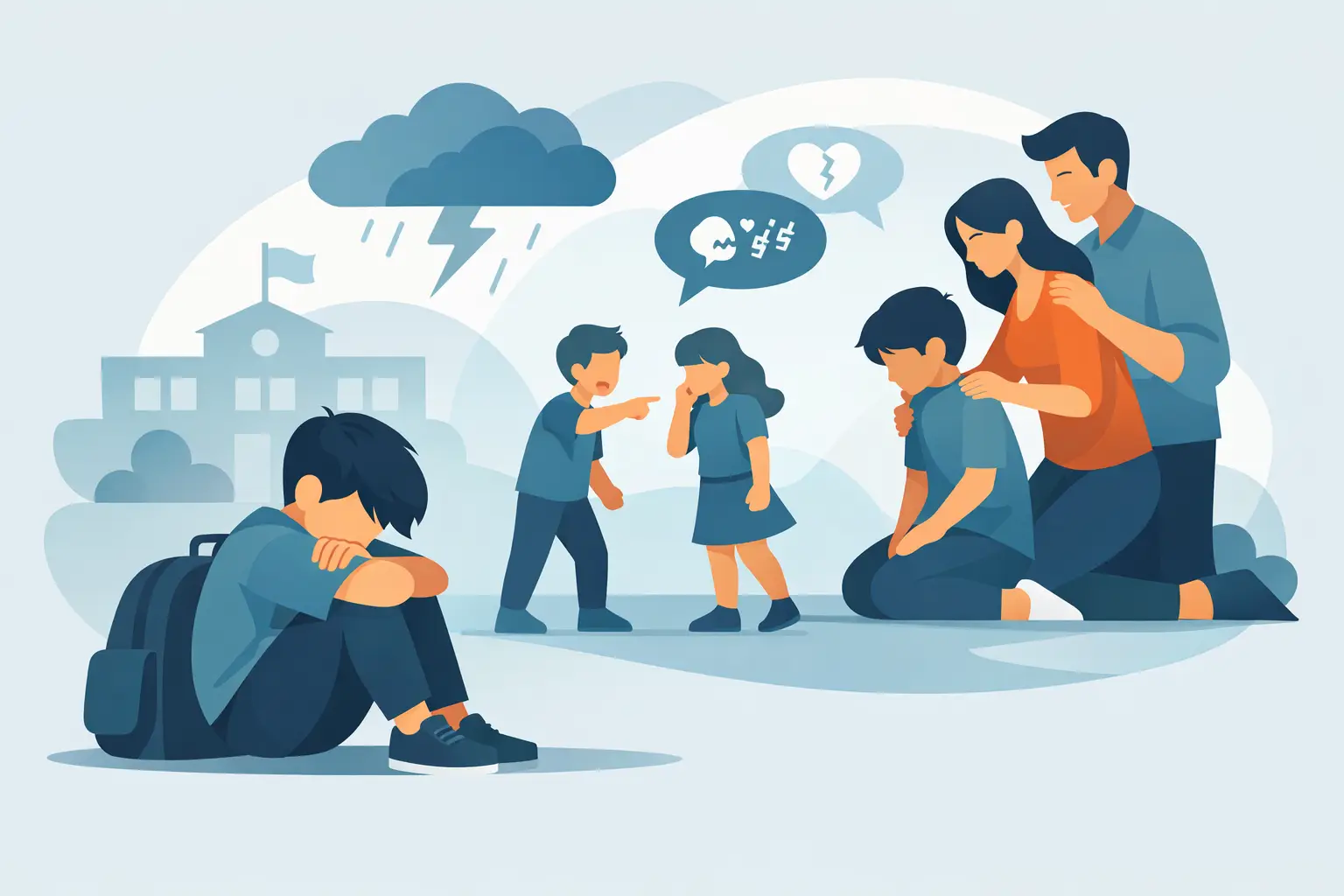
The moment your child says, “They’re picking on me,” your brain can go from confused to furious in about two seconds. If you’re wondering what to do if your child is bullied, start here: stay calm enough to listen, take it seriously, and resist the urge to charge in before you know what’s actually happening.
Bullying can leave children feeling trapped, ashamed, and powerless. It can also make parents feel the same way. The good news is that your response matters – not because you can fix everything overnight, but because you can help your child feel safer, believed, and less alone while you work out the next step.
What to do if your child is bullied at school
First, listen without interrupting. Children often hold back details if they think a parent is about to explode, minimise it, or make things worse. Keep your face and voice steady if you can. Say something simple like, “I’m really glad you told me,” or, “That sounds horrible. We’ll work this out together.”
Try to get a clear picture of what happened. Ask who was involved, where it happened, how often it’s been going on, and whether any adults saw it. If your child is upset, don’t push for a perfect timeline straight away. You’re not collecting witness statements in the first five minutes. You’re showing them you believe them.
It also helps to separate one-off conflict from repeated bullying. Children fall out, say mean things, and get into friendship dramas. Bullying usually involves repetition, intent to hurt, or a power imbalance. That might be social power, physical size, age, popularity, or digital reach. The distinction matters because the response may be different, but don’t get stuck arguing over labels if your child is clearly being harmed.
Once they’ve talked, reassure them that it’s not their fault. Children often absorb the message that if they were different – quieter, tougher, less sensitive, more popular – it would stop. That shame can be as damaging as the bullying itself.
Start with safety, not punishment
Parents naturally want consequences. That’s understandable, but your first job is safety. Ask yourself what your child needs tomorrow morning, at break time, on the bus, online, or walking home.
For some children, the immediate need is practical. They may need a different route into school, a change in where they sit, a named adult they can go to, or support during lunch and break. For others, the biggest issue is online bullying that follows them home through group chats, gaming platforms, or social media.
If there’s any threat of physical harm, sexual harassment, extortion, hate-based bullying, or stalking behaviour, treat it as urgent. Save evidence, contact the school immediately, and if there is a serious risk to your child’s safety, involve the police.
What to say to your child
Children do better when they know what happens next. You do not need a perfect speech. You do need calm, clear language.
You might say: “I believe you. You don’t deserve this. We’re going to make a plan.”
If they’re worried you’ll make things worse, try: “I won’t do anything behind your back. We’ll decide together what to say to school.”
If they blame themselves, say: “Being bullied is never your fault. The responsibility sits with the person doing it.”
And if they’re embarrassed, which many are, keep reminding them that asking for help is not weak. It is exactly what children should do when something feels unsafe.
Document what’s happening
Before you contact school, start a simple record. Write down dates, times, places, what was said or done, who witnessed it, and how it affected your child. Save screenshots of messages, posts, photos, or usernames if cyberbullying is involved.
This is not about building a dramatic case. It is about being specific. “My son says break times are hard” is easy to brush aside. “On Monday, Wednesday, and Thursday he was called names by the same two pupils near the football pitch, and we have screenshots from the group chat afterwards” is much harder to ignore.
If your child is too distressed to explain things properly, note that as well. Changes in sleep, appetite, mood, school refusal, headaches, stomach aches, or a sudden drop in confidence are relevant.
Talk to the school early
If you’re dealing with school-based bullying, contact the form tutor, class teacher, head of year, or pastoral lead. Keep your first message calm and factual. You are more likely to get results if you sound focused rather than furious, even if you feel furious.
Explain what your child has reported, what evidence you have, and what support your child needs right now. Ask what the school will do to investigate, how they will keep your child safe during the process, and when they will update you.
A useful phrase is: “I’m looking for a clear plan to stop this and keep my child safe at school.” That keeps the conversation centred on action.
Some schools respond well and quickly. Others minimise, delay, or frame it as ordinary friendship issues. If that happens, go back to the facts. Ask for the school’s anti-bullying policy. Follow up meetings in writing so there’s a record. If needed, escalate to senior leadership or the governing body according to the school’s complaints process.
What to do if your child is bullied online
Online bullying can be relentless because there is no natural break from it. Children can be mocked in class, then targeted again on the walk home, then in bed at night through their phone.
If this is what to do if your child is bullied online, start by preserving evidence before anything is deleted. Screenshot messages, profiles, comments, images, and times. Then block, mute, or report accounts where appropriate. Change privacy settings and check who has access to your child’s accounts, location, and group chats.
Do not insist your child simply hand over every device indefinitely unless safety demands it. Removing all digital access can feel like punishment to the victim, especially if their friends and support network are online. A better approach is supervised use while the situation is assessed.
It’s also worth asking whether the online behaviour connects to school peers, because that often makes it a school safeguarding issue too.
Build your child back up while the adults deal with it
Stopping bullying matters. So does helping your child recover their footing. A child who has been targeted may start shrinking their world to avoid more hurt. They stop putting their hand up, pull away from friends, fake illness, or decide they are “just bad at school” or “not liked”.
This is the moment to gently widen their support. That might mean time with one safe friend, a club where they feel competent, more connection with family, or a trusted adult at school who checks in each day. You are not trying to distract them from the problem. You are reminding them they are more than this experience.
Be careful with advice like “just ignore it” or “hit back”. Ignoring sometimes works for low-level attention-seeking behaviour, but it often fails when bullying is organised or persistent. Fighting back can escalate risk and leave your child in trouble as well.
Instead, help them practise a few grounded responses. Short phrases said clearly can be useful: “Stop.” “Don’t speak to me like that.” “I’m leaving.” Then focus on getting to safety and telling an adult, rather than winning the exchange.
When bullying affects mental health
If your child seems flat, anxious, panicky, unusually angry, or withdrawn, don’t assume it will pass once the bullying stops. Some children recover quickly. Others carry the stress in their body and behaviour for weeks or months.
Seek help from your GP or a qualified mental health professional if your child is self-harming, talking about hopelessness, refusing school for more than a short period, having panic attacks, or showing big changes in eating, sleeping, or mood. This is especially important if bullying has involved humiliation, sexualised behaviour, racism, homophobia, disability-related abuse, or the sharing of images.
You do not need to wait until things are extreme to get support. Early help is often easier than trying to pull a child back when they are already overwhelmed.
If your child has bullied someone else
Sometimes the hardest version of this conversation is learning that your child has been part of the problem. If that happens, stay honest. You can care deeply about your child and still hold a firm line.
Find out what happened, set consequences, and make it clear that cruelty, exclusion, harassment, and humiliation are not acceptable. But also look underneath the behaviour. Some children bully to gain status, copy peer dynamics, discharge anger, or avoid being targeted themselves. Accountability matters, and so does understanding what needs to change.
If you need more practical parenting support on difficult school, behaviour, and online safety issues, Kiwi Families covers many of the conversations parents end up having when childhood gets messy.
Your child does not need you to be perfect here. They need you to be steady, believable, and willing to act. When a child is bullied, calm support at home can become the thing that helps them feel safe enough to walk back into the world.