In this article
Some days it feels like you cannot ask a simple question without getting a snap back, an eye roll, or a slammed door. If you are asking, “why is my teen angry”, you are probably not looking for a textbook answer. You want to know whether this is normal, whether something bigger is going on, and what to do tonight when your child comes home already spoiling for a fight.
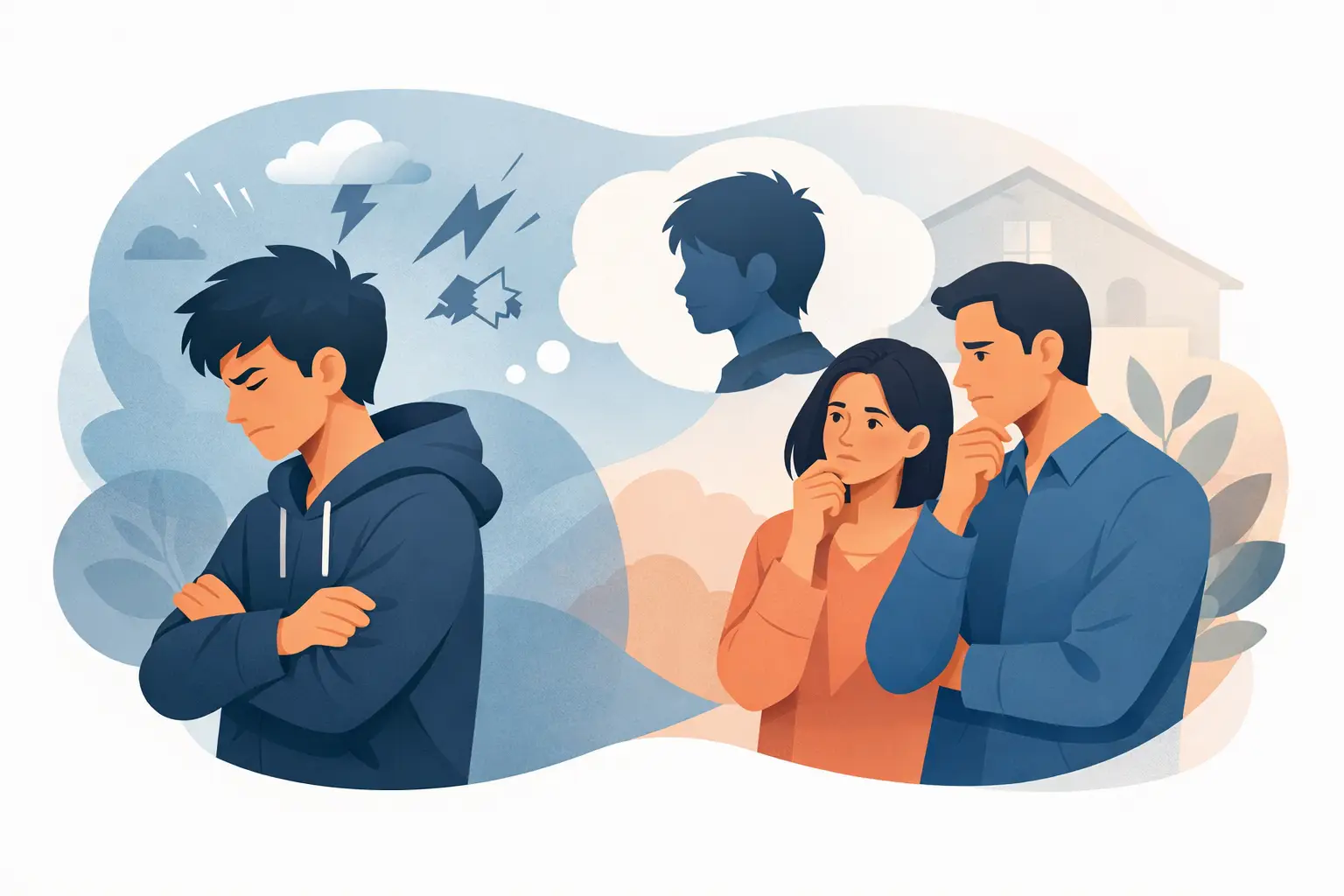
Teen anger is common, but that does not make it easy to live with. The tricky part is that anger is often not the real starting point. It is the visible emotion sitting on top of stress, shame, anxiety, grief, exhaustion, social pressure, hormones, or a sense of having no control.
Why is my teen angry all the time?
Sometimes the answer is developmental. Teen brains are still learning how to manage emotion, weigh consequences, and pause before reacting. At the same time, their world gets more intense. Friendships carry more weight. School pressure ramps up. Body changes, identity questions, romantic relationships, social media, and poor sleep all pile on.
That means your teen may genuinely feel overwhelmed and still lack the skills to express it well. Anger becomes the quickest outlet.
But “normal” does not mean “ignore it”. A teen who is angry all the time is telling you something, even if they are telling you badly.
What might be driving your teen’s anger?
Start by looking underneath the behaviour rather than reacting only to the tone. A teen who seems rude, hostile, or constantly annoyed may be dealing with one or more pressure points at once.
Stress that looks like attitude
A lot of teenagers are carrying more stress than adults realise. School deadlines, exam pressure, friendship fallouts, sports commitments, part-time jobs, family tension, and the general pressure to look fine online can create a constant state of strain.
When stress stays high, patience drops. Small requests can feel like demands. A basic question like “Have you done your homework?” can land like criticism if your teen already feels behind.
Anxiety and low mood
Anger is not always about defiance. Some teens show anxiety as irritability. Some show depression as constant frustration, withdrawal, or sudden outbursts. Boys in particular are sometimes more likely to show distress through anger than sadness, but this is not limited to boys.
If your teen seems flat, hopeless, highly reactive, or no longer interested in things they used to enjoy, anger may be one piece of a bigger picture.
Feeling controlled
Teenagers are wired to push for independence. That is healthy. The problem is that family life still runs on rules, routines, and limits. When a teen wants more freedom than they are ready for, every boundary can feel personal.
This is where parents can get stuck in a loop. The more angry the teen becomes, the tighter the parent holds on. The tighter the parent holds on, the more trapped the teen feels.
Social and digital pressure
Teen life does not stop when the school day ends. Group chats, image-sharing, gossip, exclusion, dating drama, sexting pressure, gaming conflicts, and the constant comparison of social media can keep the emotional temperature high.
A teen who is furious at home may actually be hurt, embarrassed, or humiliated by something happening on their mobile phone. Many will not volunteer that information because they fear losing access to devices or being misunderstood.
Family stress
Parents often notice teen anger increase during divorce, co-parenting conflict, money worries, illness, bereavement, moving house, or tension at home. Even when children know the facts, they do not always know what to do with the feelings.
Some teens also absorb the emotional tone of the household. If home feels unpredictable, they may become hyper-reactive or permanently on edge.
Neurodiversity, sensory overload, or unmet needs
For some teenagers, especially those with ADHD, autism, learning differences, or sensory sensitivities, anger can flare when demands exceed capacity. Transitions, noise, social confusion, executive function struggles, and repeated feelings of failure can all lead to explosive reactions.
This is one reason generic discipline advice does not always work. What looks like oppositional behaviour may partly be overload.
When teen anger is a red flag
There is a difference between a moody, snappy teen and a teenager who seems persistently volatile, frightening, or unsafe. Trust your instincts if the intensity feels off.
Take it more seriously if your teen’s anger is frequent and escalating, if they are smashing things, threatening people, hurting themselves, talking about feeling worthless, using drugs or alcohol, or becoming aggressive towards siblings, partners, or you. Also pay attention if anger comes with major sleep changes, school refusal, panic, secrecy, or a sudden collapse in functioning.
You do not need to wait for a full-blown crisis to get support. Early help is usually easier than trying to fix things once everyone is exhausted and entrenched.
What to do when your teen is angry
The first job is not to win. It is to regulate the moment enough that no one makes it worse.
If your teen is in full fight mode, logic will probably bounce straight off them. Keep your voice steady and your words short. Do not crowd them, lecture them, or fire off ten questions in a row. If safety allows, give space before you try to solve anything.
You can say, “You’re really angry. I’m not going to argue with you like this. We can talk when things have calmed down.” That sets a boundary without adding fuel.
If they are shouting, swearing, or trying to provoke you, remember that matching their energy rarely helps. Calm is not weakness here. Calm is strategy.
What to say when things are calmer
This is where parents often get more traction. Do not start with, “Why were you so rude?” Start with curiosity.
Try: “You seemed really wound up earlier. What’s going on?”
Or: “I’m wondering if this is bigger than the dishes and the homework. Did something happen today?”
Or even: “You do not have to talk right now, but I can see you’re under pressure. I’m here when you’re ready.”
These phrases work because they separate the feeling from the behaviour. You are not excusing the outburst. You are showing your teen that you can handle the truth if they tell it.
If they shrug you off, do not assume the conversation failed. Many teens need a side-door approach. They talk more easily in the car, while walking, when making food, or late at night when the house is quiet.
Boundaries still matter
Empathy without boundaries can turn into chaos. Boundaries without empathy can turn into war. Most families need both.
You can acknowledge the feeling and still set a limit. “I get that you’re angry. You still cannot call me names.” Or, “You can be upset. You cannot punch the wall.” Clear, boring, repeatable boundaries tend to work better than dramatic punishments made in the heat of the moment.
Where possible, focus on repairing patterns rather than controlling every behaviour. If mornings always explode, look at the routine. If screen arguments happen nightly, tighten the plan before the conflict starts. If your teen is constantly exhausted, sleep may be the issue that makes everything else worse.
Small changes that often help
Do not underestimate the basics. Teen anger is often sharper when a young person is hungry, sleep-deprived, overloaded, and living on adrenaline. Better sleep, less chaos, predictable routines, movement, and regular food can make a bigger difference than parents expect.
Connection matters too. Not forced heart-to-hearts, just ordinary contact that does not revolve around correction. Sit with them during a programme. Ask if they want a lift. Share a snack. Mention something funny. A teen who feels seen outside conflict is more likely to let you in when something is wrong.
And watch your own pattern. If every interaction starts with a reminder, warning, or critique, your teen may brace for battle before you have even finished the first sentence.
When to get extra support
If you are walking on eggshells, if your teen’s anger is damaging relationships, or if you suspect anxiety, depression, trauma, bullying, self-harm, or substance use, bring in support. That might start with your GP, school pastoral team, a counsellor, or a mental health professional.
Getting help is not overreacting. It is parenting. Some teenagers will not open up fully to a parent because they are trying to protect you, avoid conflict, or save face. A trusted outside adult can lower the temperature and help everyone understand what is really going on.
If you feel frightened by your teen’s behaviour, prioritise safety. Remove younger children from the room, step back from confrontation, and get urgent help if anyone is at risk.
Your teen’s anger is not proof that you have failed, and it is not something you have to accept as “just hormones” either. Anger is information. The more calmly you read it, the more likely you are to spot whether your child needs firmer limits, more support, or simply a different way back to you.