

In this article
- How to prepare for pregnancy after miscarriage (without losing your mind)
- The health checks worth doing before you try again
- The body basics that actually move the needle
- The emotional prep people skip (and regret)
- Tracking ovulation: helpful tool or anxiety trap?
- What to expect in the next pregnancy (and when to ask for help)
- A note on hope, without pressure
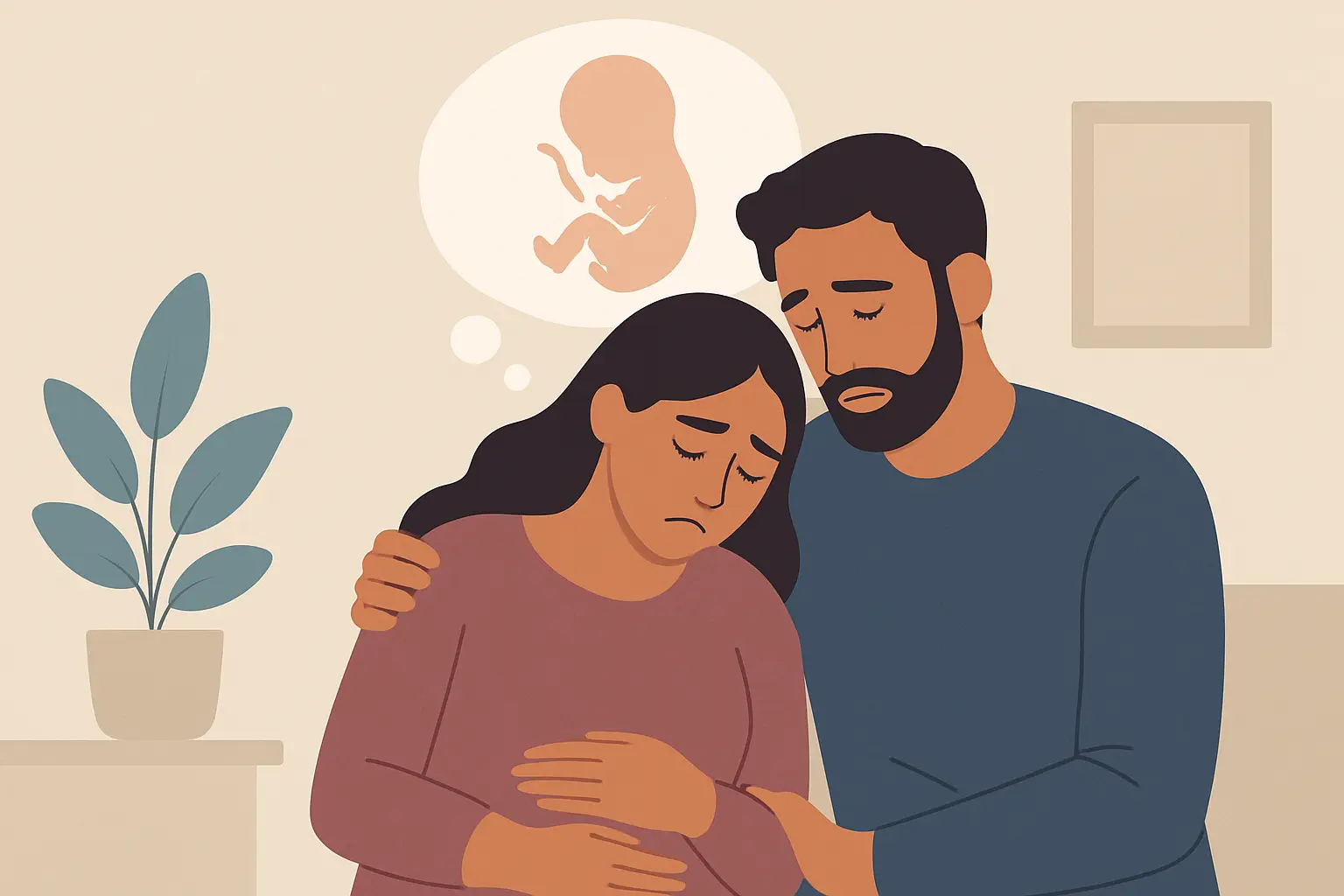
You can be both desperate to be pregnant again and absolutely terrified of it. That mix is normal, and it can make decision-making feel like wading through wet cement. Preparing for another pregnancy after a miscarriage is not about “staying positive” or doing everything perfectly. It is about stacking the odds in your favour, getting the right checks, and building a plan that protects your body and your head.
How to prepare for pregnancy after miscarriage (without losing your mind)
There is no single “right” timeline, because the right time depends on your physical recovery, what kind of miscarriage you had, and how you are coping emotionally. Some people feel ready quickly. Others need months. Neither is a moral achievement.
A pragmatic way to approach this is to separate the prep into three lanes: medical, body basics, and emotional logistics. You can work on all three at once, even if you are not sure when you will start trying.
First: check what your body needs to recover
For many early miscarriages, your body physically recovers quite quickly. Bleeding may last a week or two, and ovulation can return within a few weeks. But “can” is not the same as “should”, and it is reasonable to want a bit more certainty before you start again.
If you had a natural miscarriage and bleeding has stopped, you can usually have sex again when it feels comfortable. If you had surgery (for example, a procedure to remove pregnancy tissue) or a later miscarriage, your clinician may advise waiting longer to reduce infection risk. If you are unsure, ask directly: “Is there any medical reason I should not try this cycle?” That question cuts through vague advice.
One more practical point: your first period afterwards can be heavier, lighter, or just odd. It does not automatically mean something is wrong. What matters is whether bleeding is soaking through pads very quickly, you have fever, worsening pain, or you feel unwell – those need same-day medical advice.
When is it safe to try again?
You will hear different recommendations, and this is where “it depends” is genuinely true. Some guidance suggests waiting until after one normal period to make dating the next pregnancy easier and to give the lining of the womb time to reset. Other evidence suggests that if you feel ready and there are no complications, trying sooner does not necessarily increase miscarriage risk.
What tends to change the advice is your personal situation. If you had an ectopic pregnancy, a molar pregnancy, heavy bleeding, infection, significant anaemia, or multiple miscarriages, your clinician may recommend a specific wait and further monitoring.
If you are feeling pressured by age, fertility issues, or simply the emotional urgency of “I cannot do this limbo”, bring that into the conversation. It is part of the medical picture, not a side note.
The health checks worth doing before you try again
After one miscarriage, many people will not need extensive testing, because a single miscarriage is sadly common and often due to chromosomal chance. But “common” does not make it easy, and it does not mean you cannot ask for a sensible review.
Book a post-miscarriage debrief
If you did not get one automatically, ask for a follow-up appointment. Go in with three questions:
- “Do we know what type of miscarriage it was and was it complete?”
- “Is there anything in my history that changes my risk next time?”
- “What should I do differently, if anything, before trying again?”
If you have had two miscarriages, push for a more thorough conversation about recurrent miscarriage pathways. Even if tests come back normal, having a plan can reduce anxiety next time.
Check your iron and general health
Miscarriage can be physically draining, especially if bleeding was heavy or prolonged. If you are feeling wiped out, breathless on stairs, getting headaches, or unusually lightheaded, ask about a blood test for iron levels. Starting another pregnancy depleted can make first trimester fatigue feel brutal.
If you have a long-term condition (thyroid disease, diabetes, coeliac disease, autoimmune conditions, high blood pressure), pre-pregnancy optimisation matters. “We will see what happens” is not a plan. You want stable control before conception where possible, because early pregnancy is when key development happens.
Review medications and supplements
This is boring but high-impact. Some medicines are fine in pregnancy, some need adjustment, and some should be stopped before you conceive. Do not just stop on your own – get advice.
Start a pregnancy-appropriate folic acid supplement ideally at least one month before trying. If you have a higher-risk situation (for example certain medicines, diabetes, higher BMI, or previous neural tube issues), you may be advised to take a higher dose. That is individual, so ask.
Vitamin D is commonly low, especially in winter. If you rarely get daylight or cover up for work, it is worth discussing supplementation.
The body basics that actually move the needle
You do not need a punishing wellness reboot. You need a foundation that supports ovulation, implantation, and early pregnancy.
Food: aim for steady, not perfect
Think: regular meals with protein, fibre, and fats that keep blood sugar steady. If you are surviving on toast and tea because grief has wrecked your appetite, start small. Add yoghurt, nuts, eggs, beans, tinned fish, soups you can tolerate. This is not the season for complicated cooking goals.
If nausea or reflux was a big feature last time, stock a few “safe” foods now so you are not trying to troubleshoot at 7 weeks when you are exhausted.
Movement: gentle consistency beats intensity
If exercise helps your mental health, keep it. If exercise was punishment or pressure, this is a good moment to reset. Walking, swimming, light strength work, or Pilates-style movement can all be supportive. The goal is a body that feels capable and a nervous system that is not constantly spiking.
Sleep: treat it like a fertility tool
Sleep affects hormones, mood, and your capacity to cope with uncertainty. If sleep is falling apart, ask what is driving it: anxiety spirals at bedtime, night sweats, grief, doom-scrolling, or physical discomfort.
A realistic first step is a “mobile phone out of bed” rule and one wind-down cue you can repeat nightly – a shower, a book, or a specific podcast. It sounds basic because it is. Basics work.
The emotional prep people skip (and regret)
Miscarriage can leave you with a body that is technically “fine” and a brain that is scanning for danger 24/7. Preparing emotionally is not about eliminating fear. It is about planning for it.
Decide what you will do with the early-week anxiety
Early pregnancy after loss can be brutal because there is often little reassurance available. Some people want extra scans. Some do not, because each scan becomes a high-stakes event.
Consider what helps you cope: a planned check-in with your GP or midwife, a limited number of tests, or a clear rule like “I am allowed to Google symptoms for 10 minutes, then I stop”. You are not trying to be perfect. You are trying to keep your life functioning.
Write a simple “what to say” script for other people
People will ask, sometimes with good intentions and terrible timing. Having a script reduces the mental load.
For family or friends: “We are taking it one step at a time. If there is news to share, we will share it.”
For someone pushing: “I know you mean well, but questions about trying again are hard right now. Please let us bring it up.”
For work: “I have had a pregnancy loss and I may need some medical appointments. I will keep you updated about what I need.”
You do not owe anyone details. You are allowed to protect your privacy.
Make space for the relationship impact
Partners often grieve differently. One may want to try again immediately; the other may feel physically and emotionally done. Neither is wrong, but the mismatch can cause real friction.
Try a weekly check-in that is not a post-mortem. Ask: “What do you need from me this week?” and “What feels scary about trying again?” Keeping it structured stops every conversation becoming a late-night argument.
If you are doing this solo, the relationship piece might be your support network. Who is your “I can call at 2am” person, and who is your “good for a practical lift to an appointment” person? They are not always the same.
Tracking ovulation: helpful tool or anxiety trap?
Ovulation tracking can give you a sense of control, especially if your cycles are irregular post-loss. It can also turn sex into a performance review.
If you want a middle ground, start with noticing cervical mucus and cycle length, and only add ovulation tests if timing is genuinely unclear. If tracking starts to make you miserable, you are allowed to stop. More data is not always more peace.
What to expect in the next pregnancy (and when to ask for help)
A pregnancy after miscarriage can be physically normal and emotionally intense. You might feel detached, like you cannot believe it is real. You might feel guilty for feeling hopeful. All of that is common.
Ask early about your options for reassurance. Depending on your local system and history, you may be offered earlier monitoring. If you are not offered it and your anxiety is taking over your day, say that plainly. “I am struggling to function because I am so anxious” is a clinical statement, not drama.
If you develop severe low mood, panic, intrusive thoughts, or you are avoiding daily life, get mental health support early. Pregnancy and postpartum are high-risk windows for anxiety and depression, and prior loss can increase vulnerability.
If you want more stage-based pregnancy support, you can find practical, no-fuss guidance at Kiwi Families – just use what helps and leave the rest.
A note on hope, without pressure
Trying again after miscarriage is not a test of bravery. Some days you will feel ready, other days you will want to crawl out of your own skin. Preparing well means giving yourself as many steadying handrails as possible – a medical plan, a few daily habits that keep you resourced, and scripts that stop other people’s opinions becoming your problem. When you do take the next step, you deserve to do it in a way that feels protected, not performative.