
In this article
- Is vaping addictive for teens, or just a bad habit?
- Why teen brains are more vulnerable
- What makes vapes so addictive?
- Signs your teen may be addicted to vaping
- What nicotine addiction can look like in everyday teen life
- How to talk about it without losing the room
- What to say if your teen admits they can’t stop
- What parents can do next
- Is vaping addictive for teens if they only do it socially?
One vape in a blazer pocket can turn into a daily habit faster than many parents realise. If you’re asking, is vaping addictive for teens, the short answer is yes – and not because teenagers are weak-willed or careless. It’s because most vapes are built to deliver nicotine in a way that feels easy, social and deceptively manageable, right up until it isn’t.
That matters because the teenage brain is still developing. Reward, impulse control and stress response are all works in progress in adolescence, which makes nicotine especially sticky. A teen might start by saying they only vape with friends, only at parties, or only when they’re stressed. Then they begin reaching for it before school, between lessons, or the minute they feel anxious, bored or angry.
Is vaping addictive for teens, or just a bad habit?
Parents often hear minimising language around vaping. It’s just flavour. It’s only water vapour. Everyone does it. It helps me calm down. Those explanations can make vaping sound more like a phase than a genuine dependence issue.
But addiction and habit are not the same thing. A habit is something you do regularly. Addiction means your brain and body start to expect the substance, and stopping feels uncomfortable, upsetting or hard to control. With vaping, that substance is usually nicotine.
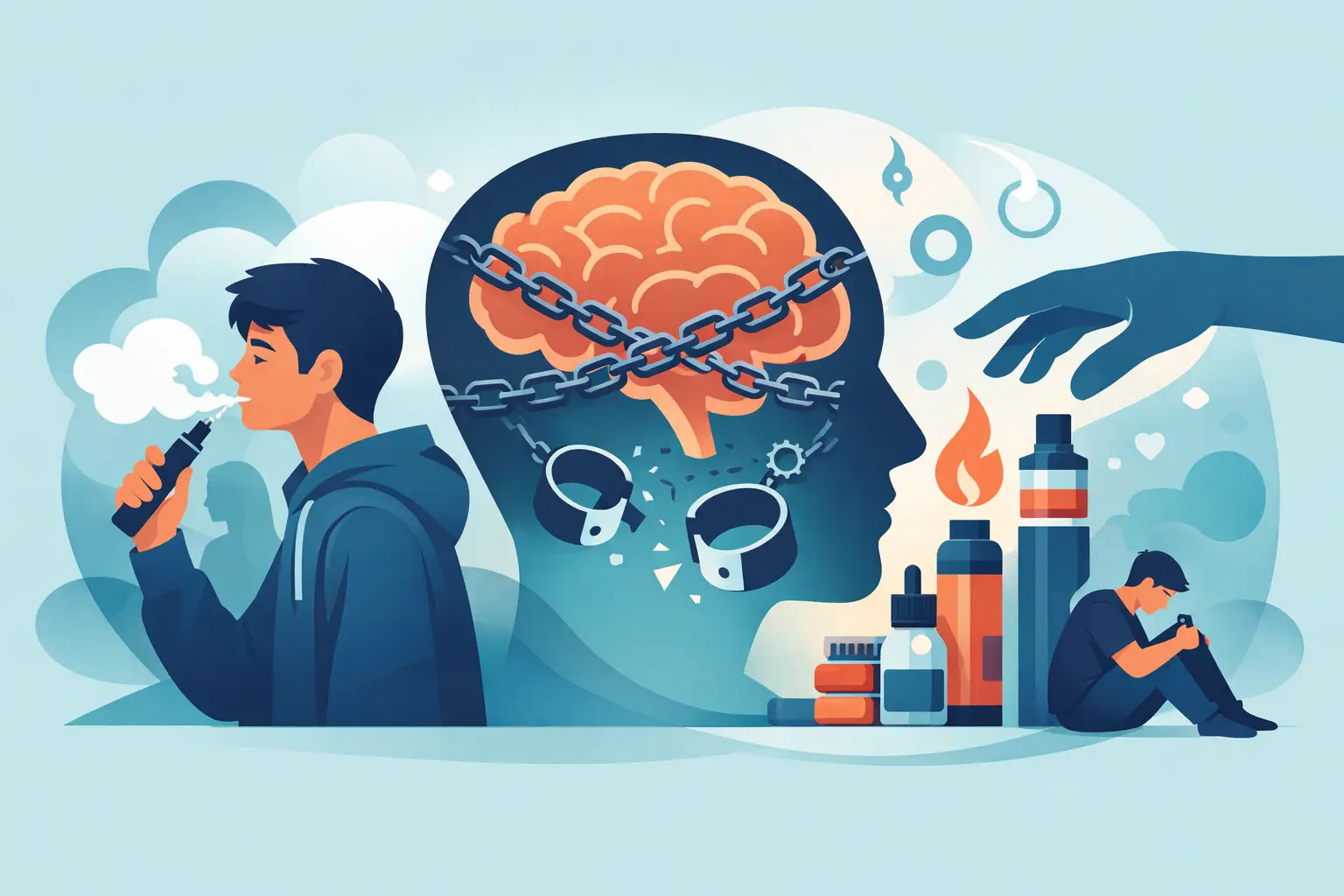
Nicotine changes brain chemistry. It triggers dopamine release, which is part of the brain’s reward system. That creates a quick sense of relief, pleasure or focus. The problem is that the relief doesn’t last long. So the teen wants another puff, then another, and the cycle starts tightening.
For some young people, this happens surprisingly quickly. Not every teen who tries a vape will become addicted, but many underestimate how easy it is to slide from experimenting into dependence.
Why teen brains are more vulnerable
Adults sometimes compare vaping to things they tried when they were younger and assume the risk is being overstated. But adolescent brains are not just smaller adult brains. They are still wiring up systems involved in judgement, attention, learning and emotional regulation.
That makes the nicotine hit feel powerful. It can improve alertness for a short while, which some teens interpret as helping with school stress or low mood. But it also trains the brain to expect nicotine whenever discomfort appears. Over time, that can reduce resilience rather than build it.
There’s also the issue of repetition. Vapes are often easier to use discreetly than cigarettes. They don’t always smell strongly, they can look like everyday devices, and they can be used in quick bursts. A teen may end up taking in nicotine far more often than they or their parents realise.
What makes vapes so addictive?
Not all vaping products are the same, but many are designed to make nicotine easy to inhale and hard to notice at first. Sweet flavours, smooth vapour and sleek devices remove some of the harshness that once put young people off smoking.
That lower barrier matters. If something feels less intense, teens are more likely to use it repeatedly. And repeated nicotine exposure is exactly what drives addiction.
Some products also contain high nicotine levels. A teenager may have no real idea how much they’re using. They may say, truthfully, that they only use one device every few days, without understanding that the nicotine content is still substantial. This is one reason parent conversations need to go beyond “Do you vape?” and into “How often?”, “What do you use?”, and “How do you feel if you can’t have it?”
Signs your teen may be addicted to vaping
The clearest sign is not that they’ve tried vaping once or twice. It’s that vaping starts to organise their behaviour.
You might notice irritability when they can’t access a device, sudden mood dips, restlessness, headaches or trouble concentrating. Some teens become more secretive, spend more money without explanation, or panic if they think they’ve lost their vape. Others insist they can stop any time, but never actually go a day without it.
There can also be more subtle clues. They seem unusually anxious before school and calmer after seeing friends. They ask for cash more often. They’re chewing gum constantly, using heavy fragrance, or keeping odd chargers and unfamiliar gadgets in their room or bag.
None of these signs proves addiction on its own. Teenagers can be moody and private for all sorts of reasons. But patterns matter more than one-off incidents.
What nicotine addiction can look like in everyday teen life
This is where the issue becomes more than a health lecture. Addiction can start affecting ordinary routines in ways that are easy to miss.
A teen who is dependent on nicotine may struggle to get through a school day without cravings. They may become distracted in class, increasingly stressed at home, or more reactive in family conversations. Sleep can also take a hit, especially if they’re using late at night.
The emotional side matters too. Some teenagers begin to believe vaping is the reason they can cope. That belief can become deeply ingrained even when vaping is making anxiety, irritability and low mood worse between uses.
So if your child says, “It helps me calm down,” they may not be lying. Nicotine can relieve the discomfort caused by nicotine withdrawal. That’s one of the traps. It creates part of the distress, then seems to solve it.
How to talk about it without losing the room
If you go in hot, many teens will shut down. If you go in too softly, they may assume you’re not serious. The middle ground is calm, direct and specific.
Start with what you’ve noticed rather than a dramatic accusation. “I’ve seen you getting stressed when you can’t find your vape, and I want to talk about what’s going on.” That lands better than, “You’re addicted and ruining your life.”
Try to keep the first conversation focused on understanding. Ask, “When did you start?” “Do your friends vape too?” “Do you feel like you need it now?” “What happens if you don’t have it?” You are looking for honesty, not a perfect confession.
If they minimise it, don’t get dragged into a courtroom debate. You can say, “You may not feel ready to call it addiction, but if stopping feels hard, that tells us something.” That keeps the conversation grounded in behaviour, not labels.
What to say if your teen admits they can’t stop
This is the moment to stay steady. Shame rarely helps, and panic usually makes teens hide more.
You could say: “Thank you for telling me. I’m glad you were honest. We can deal with this, but we do need to deal with it.”
Then move from emotion to plan. Ask what triggers vaping most – stress, boredom, social pressure, habit, or all of the above. A teen who vapes mainly with friends may need a different strategy from one who is using first thing in the morning or alone in their room.
Be clear about boundaries. You do not need to pretend this is fine. You can say, “I’m not OK with vaping, and I’m going to help you stop.” Support and limits can sit in the same sentence.
What parents can do next
Start by reducing secrecy. That may mean checking where devices are coming from, limiting cash access, and being more aware of social patterns. If your teen is heavily dependent, trying to stop may come with irritability and cravings. Expect some pushback.
It also helps to replace the function vaping is serving. If it’s stress relief, they need other ways to come down quickly. If it’s social belonging, they need support navigating peer pressure without feeling isolated. If it’s become part of every routine, they need those routines interrupted and rebuilt.
For some families, this can be managed at home with clear rules, regular check-ins and practical support. For others, especially where there’s high nicotine use, anxiety, school refusal or other substance issues, outside help is sensible. A GP, school nurse or youth-focused health professional can help assess dependence and discuss safe next steps.
Is vaping addictive for teens if they only do it socially?
Sometimes yes, sometimes not yet. Social use can stay occasional for a while, but it is often the on-ramp. If a teen is only vaping at parties today but thinking about it during the week, borrowing friends’ devices, or feeling strong urges when they’re stressed, the pattern may already be shifting.
This is why early action matters. You do not have to wait for a full-blown crisis to step in. If something is getting its hooks in, the easiest time to address it is before it becomes part of your teen’s identity.
Parents do not need a perfect script or a forensic understanding of every vape product on the market. What helps most is staying observant, asking plain questions, and treating nicotine dependence like the real issue it is – not a moral failure, not a harmless phase, and not something your teen should handle alone.
If your gut says this is becoming more than experimentation, trust that instinct. A calm conversation today is a lot easier than untangling a stronger addiction six months from now.