

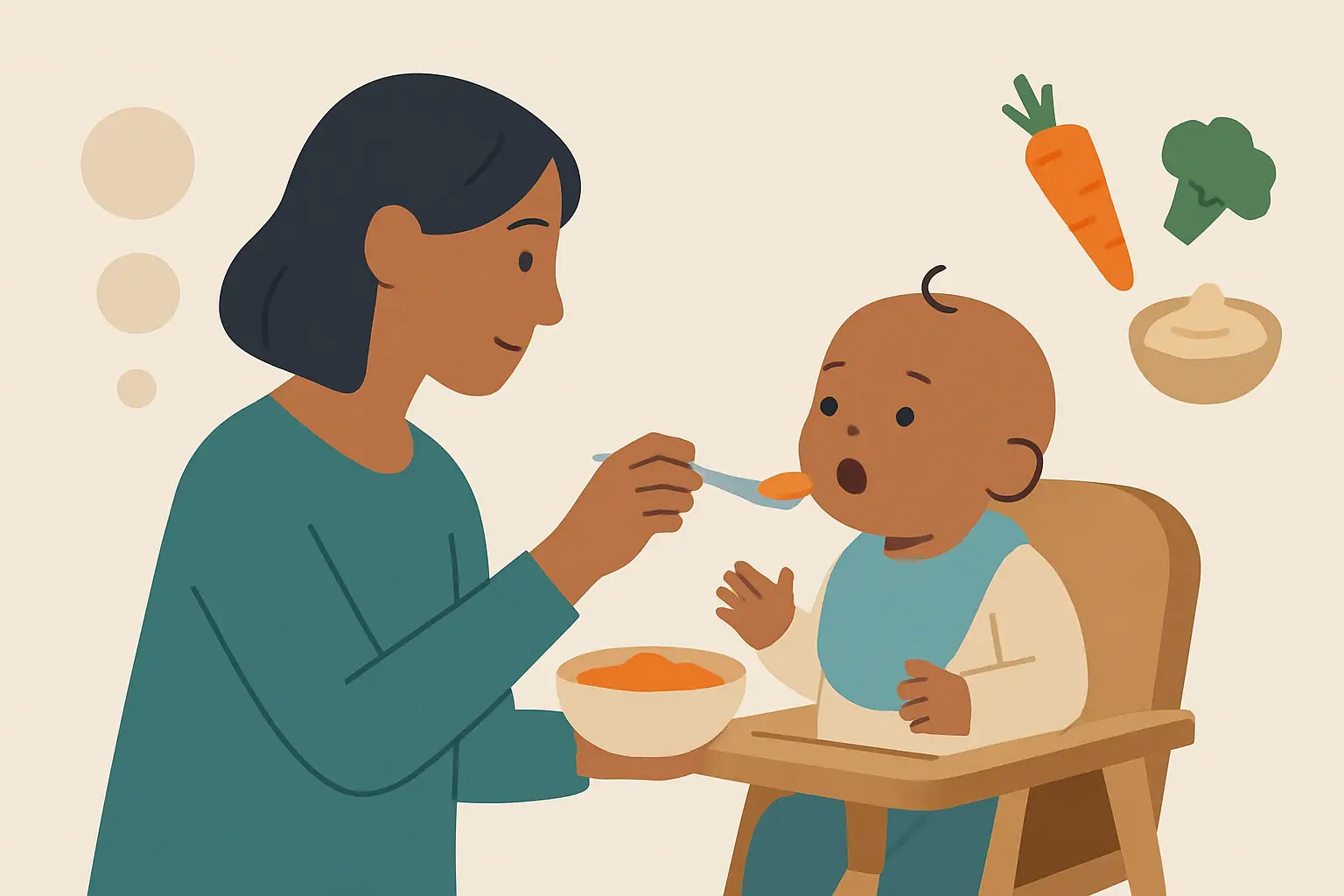
That moment your baby starts tracking your toast like it owes them money? That is usually when parents start googling a starting solids schedule by age at 11pm, trying to figure out what “enough” looks like without accidentally replacing milk too soon.
Here is the reassuring truth: there is no perfect timetable that every baby follows. What you are aiming for is a steady shift over months – from tasting and learning, to building skills, to gradually eating enough food that it supports growth alongside milk. The schedule below gives structure without pretending your baby will read it.
Before you start: the green lights (and the red ones)
Most babies are ready for solids at around 6 months. The useful signs are practical, not mystical: they can sit with support and hold their head steady, they can bring food to their mouth and coordinate chewing movements, and they have lost the strong tongue-thrust reflex that pushes food straight back out.
If your baby was born early, or has reflux, eczema, feeding issues or slow weight gain, it is worth checking in with your health visitor or GP about timing and how to introduce allergens. Also, solids are not for “better sleep”. Some babies sleep more once they eat more; plenty do not. If sleep is the real issue, treat it directly rather than loading a tiny tummy at bedtime.
The rhythm to hold onto
Think in three parallel tracks: milk stays primary for a while, food moves from tastes to meals, and textures progress from smooth to lumpy to chopped.
Milk feeding (breastmilk or formula) remains the main source of nutrition through the first year. Solids are a learning project at first, then gradually become a bigger slice of the day. If you are using baby-led weaning, you are still following the same principles – you are just skipping purées and offering safe finger foods from the start.
Water can be offered in an open cup or free-flow sippy cup with meals once solids begin. Juice is not needed.
Starting solids schedule by age: what it can look like
The ages below are a guide. Your baby might move quicker with textures, or need a bit longer. What matters is the direction of travel.
Around 6 months: tastes, then one small meal
At this stage, the goal is exposure and skill-building. One “meal” a day is plenty, and it might be only a few spoonfuls or a couple of pieces.
Start with simple foods and repeat them. Babies need many tries before a food feels familiar, so a refused broccoli floret today is not a verdict. Offer a mix across the week: iron-rich foods (important), veg and fruit, and energy foods like yoghurt, avocado, porridge oats or nut butter thinned and mixed into something.
Texture-wise, you can do smooth purées, mashed foods with a little texture, or soft finger foods. If you are spoon-feeding, do not get stuck on perfectly smooth purées for weeks. Moving on from “silky” early helps reduce gagging later.
How this day can work: offer milk as usual, then solids at a time you are not rushing and your baby is not over-tired. Many families find mid-morning or lunchtime easiest.
7 months: one meal most days, edging towards two
By now you are looking for consistency. One solid meal a day becomes routine, and you can begin adding a second meal if your baby seems keen and coping well.
This is a good month to widen variety and start thinking in “mini plates” rather than single foods. You might offer porridge with fruit in the morning, and mashed lentils with veg at lunch, or strips of omelette with soft veg sticks.
Texture should keep progressing. If you started with purées, move into thicker mashes and fork-squashed foods. If you started with finger foods, keep offering soft pieces and begin including foods with gentle resistance, like well-cooked pasta spirals, soft meat strips, or toast fingers with a thin spread.
Allergens can be introduced once you start solids, one at a time, in small amounts, ideally earlier rather than later. Common ones include peanut, egg, cow’s milk (in food), wheat and fish. If there is a strong family history of allergy, especially eczema and food allergy, ask for personalised advice.
8 to 9 months: two meals a day, practise chewing
This is a key window for skills. Babies who are given only smooth foods for too long can struggle with lumps later, so keep moving forwards.
Aim for two meals most days, with a third “taster” only if it suits your baby and your life. Portions vary wildly here. Some babies eat three bites then throw the rest on the floor with great confidence. Others surprise you. Both can be normal.
Focus on:
- Iron at least once a day (meat, fish, eggs, beans, lentils, fortified cereal).
- More texture – chopped soft foods, minced meat in sauce, flaked fish, soft rice, ripe fruit pieces.
- Self-feeding opportunities, even if you also spoon-feed. A pre-loaded spoon of yoghurt, or soft veg sticks, counts.
If you are wondering about milk feeds: many babies still take similar milk volumes, but some naturally drop a little as solids increase. You do not need to force a reduction. Follow your baby’s cues and keep milk feeds available.
10 to 12 months: three meals (most days), family food with tweaks
This is where it starts to feel more like “normal eating”. Many babies manage three meals a day by 10 to 12 months, plus milk feeds.
Offer breakfast, lunch and dinner, with fruit or yoghurt as part of a meal if you need something easy. Some babies also need a snack, especially if they are awake for longer stretches or very active, but it is not a rule.
Texture can now be closer to family food: chopped rather than mashed, a wider range of flavours, and mixed meals like casseroles, curries (mild), pasta dishes and stews. The “tweaks” are about safety and salt. Keep salt low, avoid honey under 12 months, and chop round foods like grapes and cherry tomatoes. Whole nuts and big spoonfuls of nut butter are a choking risk, but thin nut butter mixed into porridge or yoghurt is usually fine.
Milk is still in the picture. Breastfed babies often continue on demand. Formula-fed babies may be moving towards fewer bottles, but you are not obliged to rush it. What you are watching for is that solids are doing real work: your baby is eating a spread of foods, including iron-rich options, and growing well.
A realistic daily flow (so you can stop overthinking timings)
Parents often get stuck on the question: milk first or food first? The honest answer is: whichever makes your day calmer and keeps milk intake steady.
If your baby is ravenous and furious, a small milk feed first can take the edge off so they can focus on food. If they are happy and alert, offering solids first can help them eat more. Many families land on milk on waking, solids mid-morning, milk after the nap, solids late afternoon, milk before bed – but your baby’s naps and nursery schedule may laugh at that.
The simplest rule is this: do not cut milk to “make them hungry for solids”. Offer solids regularly, keep it low pressure, and let appetite do its job.
What to do when it’s not going smoothly
Gagging is common when texture increases, especially with finger foods. Gagging is loud and dramatic; choking is quiet and serious. If you are anxious, consider a baby first aid class so you can tell the difference and feel more confident.
Constipation can show up when solids start. Offer water with meals, include fruit like pears, plums and kiwi, and balance binding foods (banana, white rice) with fibre. If constipation persists or your baby seems in pain, get medical advice.
If your baby refuses everything, zoom out. Are they teething, overtired, unwell, or being offered food when they are not hungry? Keep offering, keep sitting together at meals, and focus on the routine rather than the mouthfuls.
A quick word on “what to say” when family pressure arrives
Someone will say, “They need more food” or “Just give them baby rice”. You can keep it simple:
“I’m following their cues – milk is still their main nutrition and solids are about learning right now.”
Or, if you need a firmer boundary:
“We’re keeping it safe and age-appropriate. Please don’t feed them anything unless we’ve okayed it.”
The bottom line: you’re building a feeder, not hitting targets
A schedule is meant to reduce mental load, not create a new one. If your baby is roughly tracking the shift from one meal to two, then towards three, and textures are moving forwards, you are doing the job.
If you want more stage-based parenting guidance that’s practical and calm, Kiwi Families is built for exactly this kind of “tell me what to do next” moment.
The helpful thought to carry into tomorrow’s breakfast mess is this: consistency matters more than perfection. Keep offering real food, keep it safe, keep it relaxed – and let the learning compound.