

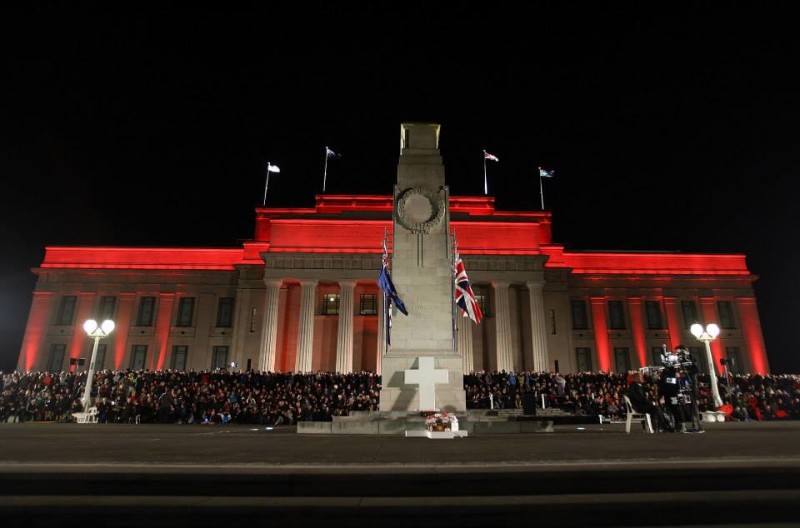
Anzac Day is a special day both in New Zealand and Australia. Unfortunately the true history and significance of Anzac Day is becoming muddled and forgotten.
Most kiwis can tell you that it has something to do with the First World War, New Zealand soldiers landing at Gallipoli, and poppies, but unfortunately many of the details have been lost along the way.
This article sheds some light on the true significance of Anzac Day, how it has evolved over time, and what traditions and rituals are still apparent today.
This year, why not share a special part of New Zealand history with your children, and organise some Anzac Day activities at home?
When is Anzac Day observed?
Anzac Day is on April 25 every year, and is a day for New Zealanders and Australians to remember men and women who have served and lost their lives in war.
The original Anzac Day observances were largely for servicemen and their families, but it quickly became a day for all New Zealanders and Australians to remember and commemorate men and women who had lost their lives.
The term ANZAC is an acronym for the Australian and New Zealand Army Corps, and was first used in World War 1.
Why is Anzac Day celebrated on April 25th?
Many people think April 25th is the day the ANZACS suffered great loss of life at Gallipoli, but the conflict and loss of life actually lasted several months.
April 25th 1915 is in fact the day that New Zealand and Australian soldiers landed at Gallipoli as a part of the Allied Gallipoli Campaign – they were not evacuated until December of the same year.
Returned Servicemen were responsible for the very first Anzac Day on April 25th 1916 – the first anniversary of the ANZAC landing at Gallipoli. It was through their organisation and commitment that the day was officially recognised as a holy day by the government in 1922.
How is Anzac Day observed?
The large loss of life suffered at Gallipoli sparked the commemorative day, but over time Anzac Day has grown into a day where servicemen and women are remembered and honoured for fighting in wars right across the globe.
While different cities and centres all have their own Anzac Day commemorations, there are many traditions and rituals which are standard throughout.
Anzac Day Parades or the Dawn Parade
The Dawn Parade, or Dawn Service as it is sometimes called, is the most popular of the Anzac Day traditions.
It begins with a parade by returned servicemen and women to the local war memorial, where they are met by family and other members of the community. Uniformed servicemen form a guard of honour around the memorial.
The short service starts with a drum roll, and includes the National Anthem, hymns, prayers and readings. The most universal reading is the Anzac dedication:
At this hour, on this day, ANZAC received its baptism of fire and became one of the immortal names in history. We who are gathered here think of the comrades who went out with us to battle but did not return. We feel them still near us in spirit. We wish to be worthy of their great sacrifice. Let us, therefore, once again dedicate ourselves to the service of the ideals of which they died. As the dawn is even now about to pierce the night, so let the memory inspire us to work for the coming of the new light into the dark places of the world.
They shall not grow old, as we that are left to grow old; Age shall not weary them nor the years condemn.At the going down of the sun and in the morning. We will remember them.
The dawn service is brought to an end with a lone bugler sounding the Last Post, and then the crowd observes a minute silence in memory of those who have passed away. The final act is that of a drum roll again, and the returned servicemen and women march away from the memorial.
Source: Royal Australian Air Force
While many people believe the dawn service is timed to coincide with ANZAC landing at Gallipoli, this is not strictly true.
There were some Australian soldiers who landed just before dawn, but the first New Zealanders did not land until after 9am, and most landed in the afternoon.
So while the dawn service has some timing significance, much of its importance comes as war veterans remember the routine dawn ‘stand-to’ before the engagement of war began.
Anzac Breakfast
After the dawn service, the Returned Servicemen Association (RSA) hosts an Anzac breakfast.
Mostly this is to give people a chance to talk and reminisce, and often a traditional ‘rum and coffee’ is served along with an Anzac Biscuit. The rum and coffee signifies a tot of rum, which was the traditional pre-battle ration.
Anzac Day Service
In addition to the Dawn Service, which is primarily focussed on the returned servicemen and women, there is always a mid-morning service on Anzac Day.
This service is often referred to as the citizen’s service, because it is designed for everybody in the community to participate in.
The mid-morning service is very similar to that of the dawn service; however returned servicemen are joined by other members of the community for the parade itself. Serving members of the armed forces, cadets, youth organisations and schools often march alongside the returned servicemen, and in some centres they are also joined by mass bands.
It is during the mid-morning service that community members are given the opportunity to lay wreaths in remembrance of those who have passed away.
Anzac Wake
After the official services and observances have taken place, servicemen and women, veterans and their families enjoy a time of remembrance and relaxation at the RSA.
This time does not usually have any formal proceedings, but instead takes place as would a ‘wake’ after a funeral.
Anzac Day Poppies

While some people relate Poppies to Anzac Day, they are actually a symbol of remembrance for all people who have lost their lives at war.
Their origins go back as far as the Napoleonic Wars of the 19th Century, when the Flanders poppies were the first flowers to bloom over soldiers’ graves in France and Belgium.
Nowadays, red poppies are made out of cloth or paper and worn for a few days as a sign of remembrance. Poppy Day itself is usually the Friday before Anzac Day.
Anzac Day Biscuits
Anzac Biscuits are a true kiwi favourite (although both New Zealand and Australia claim to have invented them!). They are, like most old-style biscuits, made from basic ingredients and provide a fairly nutritious cookie that can keep well for weeks.
These biscuits were popular during both world wars, as women at home could send them overseas and know they would still be edible after weeks at sea. Soldiers would break them up into pieces to make porridge, or simply enjoy them with a cup of tea.
Classic Anzac Biscuit Recipe

You might also like to read our ANZAC Day activities article for ideas you can do in your own home. And the Eventfinda website has a list of most of the Anzac Day Dawn Parades happening around the country.



lisa out here swearing
not cool man its not nice to say this should be a time of remembering not being mean
It was beautiful *cri*
bros that not cool to say
why
hi
very good site
i like it