In this article
You finally get into a rhythm with milk feeds, naps and the endless washing up, and then solids arrive with a fresh round of decisions. One of the biggest is this: baby led weaning vs purees. Parents often feel pushed to pick a side, as if choosing the wrong method will shape their child’s eating forever.
It usually isn’t that dramatic.
For most babies, this is less about finding the one correct philosophy and more about choosing a starting point that suits your baby’s development, your confidence, and your actual life. A baby with a strong gag reflex, a nervous parent and a hectic household may do brilliantly with spoon-fed foods at first. Another baby may be desperate to grab food, copy everyone at the table and reject the spoon from day one.
Baby led weaning vs purees – what’s the difference?
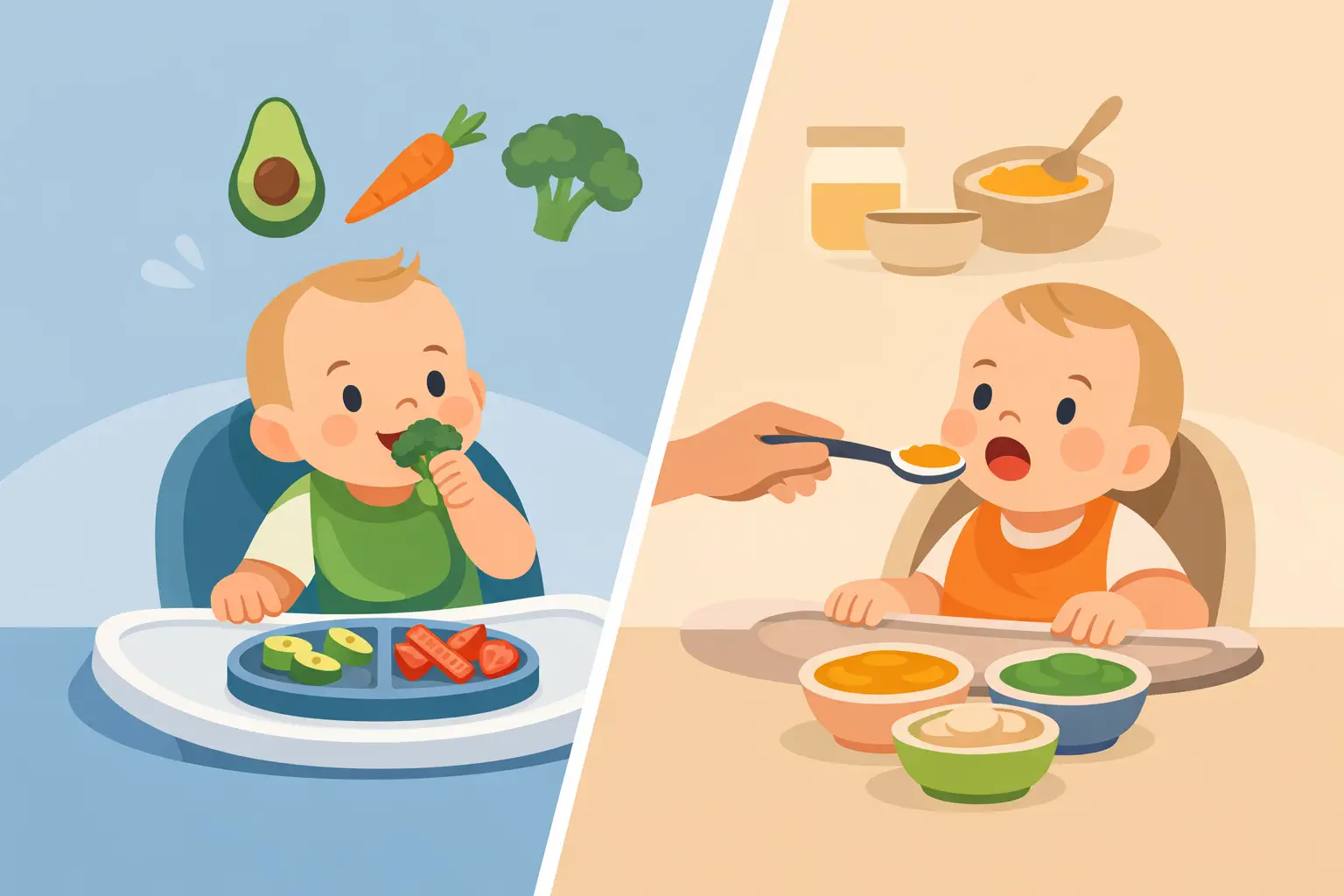
Baby-led weaning means offering soft, graspable foods that your baby can pick up and feed themselves. Think soft batons of avocado, cooked kumara, ripe pear, tender broccoli florets or strips of omelette. The baby stays in charge of what goes into their mouth, how much they eat and how quickly they explore it.
Purees are smoother foods offered on a spoon, usually starting with a thinner texture and becoming thicker and lumpier over time. That might include pureed vegetables, fruit, lentils, porridge or yoghurt. In a puree-led approach, the adult usually controls the pace of the meal more directly.
The reason this debate gets heated is that each method seems to promise something parents care deeply about. Baby-led weaning is often linked with independence, oral motor skill development and relaxed family meals. Purees are often associated with reassurance, easier tracking of intake and a gentler start for anxious parents.
Both can work. Both also have downsides if they’re done rigidly.
What matters more than the method
Before getting caught up in feeding trends, it helps to come back to the basics. Solids are usually introduced around six months, when babies are showing signs of readiness. That includes sitting upright with support, having good head control, losing the tongue-thrust reflex, and showing real interest in food.
This matters more than whether the first food is mashed or held in a fist.
Readiness is also about safety. A baby who slumps in the highchair, struggles to bring food to their mouth, or seems overwhelmed by textures may need a slower start. Equally, a baby trying to swipe toast from your plate is giving you useful information.
If you’re ever unsure about readiness, growth, allergies or swallowing concerns, it’s worth checking in with your GP, health visitor or paediatric dietitian.
The case for baby-led weaning
The biggest strength of baby-led weaning is that it lets babies practise eating as a skill, not just receive food. They learn to grasp, bite, chew, spit out, gag and manage different textures. That can make mealtimes feel more natural because the baby joins in with what the family is already doing, with suitable modifications.
There’s also a practical upside. Many parents find it simpler to serve parts of the family meal rather than prepare separate purees. If dinner is soft roasted veg, shredded chicken and rice, the baby can often have adapted portions without much extra effort.
Some babies also prefer autonomy from the start. They clamp their mouth shut for the spoon but happily gum a strip of toast. When that happens, forcing spoon-feeding can become a battle no one enjoys.
That said, baby-led weaning can feel stressful. It is messy, wasteful at times, and not every parent stays calm while watching their baby gag on a slippery piece of banana. Gagging is common and protective, but it can look alarming if you’re not expecting it. If your anxiety spikes at every mouthful, that matters too.
The case for purees
Purees often get dismissed as old-fashioned, but they solve real problems for real families. They can be a useful starting point for babies who are interested in food but not yet skilled at self-feeding. They can also help parents feel more confident, especially with a first baby.
A puree-led start can make it easier to offer iron-rich foods early, such as pureed meat, lentils or beans, and to notice how your baby responds to particular ingredients. For some families, that sense of structure lowers stress enough to make solids enjoyable rather than frightening.
Purees can also be helpful when a baby is tired, unwell, or slower to warm to texture. Not every child takes to finger foods straight away, and that is not a sign that something has gone wrong.
The catch is that purees should not stay smooth for too long. Babies need texture progression. If they only ever get silky spoon-fed food, they miss chances to develop chewing and self-feeding skills. So the real issue is not purees themselves. It is getting stuck there.
Safety is the non-negotiable part
Whichever route you choose, safe food preparation matters more than the label.
Babies should always be upright in a highchair and actively supervised while eating. Round, hard, sticky or slippery foods need extra care. Whole grapes, nuts, chunks of apple, raw carrot coins and spoonfuls of nut butter are obvious examples to avoid or modify.
For baby-led weaning, foods should be soft enough to squash easily between your fingers. For purees, the danger is not the spoon but assuming all smooth foods are risk-free while delaying texture progression too long.
Parents also need to know the difference between gagging and choking. Gagging is noisy, messy and common as babies learn. Choking is often silent and urgent. If you’re starting solids, a baby first aid course is one of the most useful confidence-builders you can give yourself.
Baby led weaning vs purees and nutrition
One of the biggest worries with baby led weaning vs purees is whether babies actually eat enough. Early on, many don’t eat much at all, whichever method you use. That’s normal. Milk remains their main source of nutrition in the first stage of solids.
What matters is repeated exposure to a range of foods, especially iron-rich foods once solids begin. Around six months, iron stores start to drop, so foods like soft cooked meat, lentils, beans, eggs, yoghurt and iron-fortified cereals become important.
This is one reason a mixed approach often works well. A baby might self-feed strips of omelette at lunch but have porridge on a spoon at breakfast. They might explore roasted courgette with their hands and also eat mashed lentils. That is not cheating. It is feeding your baby.
The best approach for your family may be both
A lot of parents quietly end up here. Not because they failed to commit, but because life is rarely tidy.
You might use finger foods when you have the time and headspace to sit with the mess, then offer thicker spoon-fed food when you need something quicker. Grandparents may feel more confident with yoghurt or mash, while you offer soft finger foods at dinner. Nursery might do one thing, home another. Babies cope with that better than the internet suggests.
A combined approach can also help if your baby is enthusiastic about some textures and hesitant about others. You are allowed to be flexible. In fact, flexibility is often what keeps mealtimes calmer.
What to do if you’re stuck
If you’re trying to decide where to start, keep it simple. Look at your baby, not the trend.
If your baby grabs food, sits well and seems eager to copy you, begin with soft finger foods and stay close. If you feel anxious or your baby seems unsure, start with thicker purees and mashed foods, then move towards lumps and self-feeding as soon as you can. If allergies are on your mind, introduce common allergens carefully and one at a time in forms that are safe for babies.
What you’re aiming for is not a perfect feeding identity. It’s a baby who gets regular chances to explore food safely, learn textures, and join family meals without turning every bite into a test.
If you need a sanity check, Kiwi Families is right about one thing parents forget when feeding advice gets noisy: practical beats perfect. A calm, responsive parent who offers a variety of suitable foods will usually do far better than one trying to follow a rigid plan they hate.
Solids are the beginning of a long relationship with food. You do not have to get every spoonful or every broccoli floret exactly right. Start safely, stay flexible, and let your baby learn at their own pace.