

In this article
- What the future of school homework with AI tools really looks like
- Where AI tools can genuinely help with homework
- The risks parents should take seriously
- What schools are likely to change
- How to set boundaries at home without turning it into a war
- What to say if your child is already relying on AI
- The future of school homework with AI tools for families
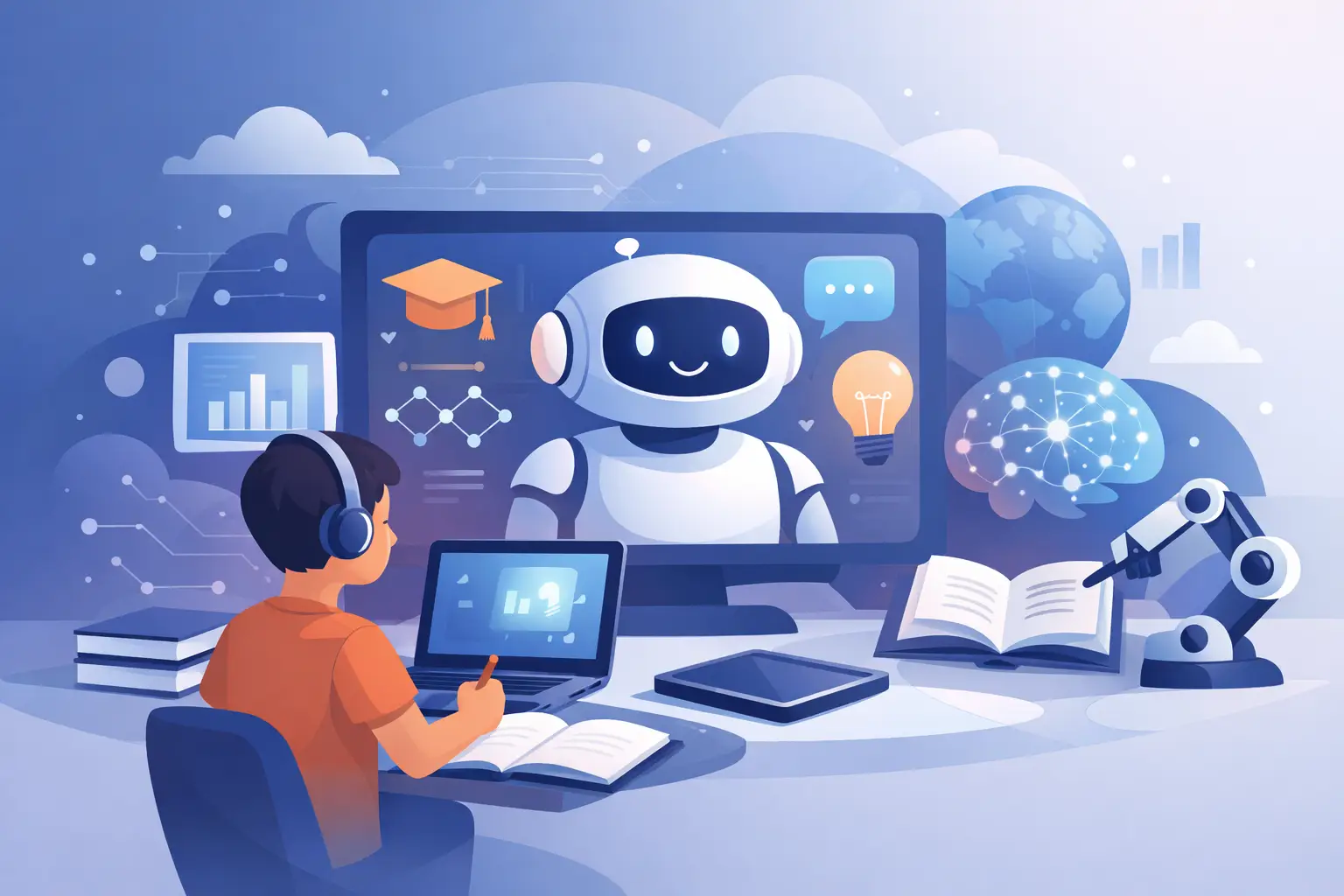
A Year 7 pupil can now type a homework question into an AI chatbot and get a polished answer in seconds. That is the bit most parents notice first – the speed, the confidence, the slightly-too-perfect paragraph. But the future of school homework with AI tools is not just about children finding shortcuts. It is about a much bigger shift in how learning happens at home, what schools choose to assess, and where parents need firmer boundaries.
For many families, this change feels awkward rather than exciting. You want your child to keep up with the world they are growing into, but you also do not want homework to turn into a copy-and-paste exercise dressed up as effort. Both instincts are reasonable. AI can support learning well, but only when adults stay clear about what homework is actually for.
What the future of school homework with AI tools really looks like
Homework has never only been about getting the right answer. It helps children practise skills independently, learn how to manage time, and sit with manageable frustration without someone rescuing them straight away. AI changes that because it can now act like a tutor, editor, explainer and answer-generator all at once.
That does not mean homework disappears. More likely, it changes shape. Schools are already moving towards tasks that ask pupils to show their thinking, reflect on process, compare sources, or apply knowledge in class after work has been done at home. If a bot can write the paragraph, the value shifts to discussion, judgement and proof of understanding.
For younger children, AI may end up being used more by adults than by pupils. A parent might use it to explain fronted adverbials in simpler language, create a practice spelling list, or turn a confusing maths method into clearer steps. For older pupils, especially in secondary school, AI will probably become a routine study tool. They may use it to quiz themselves before a test, brainstorm essay angles, or get feedback on whether a piece of writing makes sense.
The tension is obvious. The same tool that can help a child understand Shakespeare can also write the homework on Shakespeare. That is why this is less a technology story and more a boundaries story.
Where AI tools can genuinely help with homework
Used well, AI can reduce some of the pointless friction around homework. It can explain a concept in a different way when a child is stuck. It can generate extra practice questions for a topic they have not quite mastered. It can help children who struggle to get started by breaking a task into smaller steps.
This matters because not every family has the same resources at home. Some parents feel confident helping with algebra or grammar. Others are doing their best after a long day and are one worksheet away from tears. AI can, at times, fill part of that gap. For children with additional learning needs, it may be especially useful for rephrasing instructions, offering examples, or giving immediate feedback without the social pressure of asking in class.
There is also a case for AI helping pupils become better self-editors. A child who writes their own paragraph and then asks an AI tool, “Does this make sense?” is doing something different from a child who says, “Write this for me.” The first uses technology to strengthen learning. The second avoids it.
That distinction will matter more and more. Parents do not need to panic every time AI appears in homework. They do need to pay attention to how it is being used.
The risks parents should take seriously
The biggest risk is not only cheating. It is dependency. If a child gets used to outsourcing the hard bit – planning, thinking, drafting, checking – they may hand in acceptable work while quietly losing confidence in their own ability.
There is also the problem of accuracy. AI tools can sound convincing while getting facts wrong, inventing sources, or giving explanations that are muddled. A confident tone can fool children into trusting rubbish. Younger pupils are especially vulnerable because they do not yet have the background knowledge to spot mistakes.
Then there is voice. Homework helps teachers see what a child can actually do. If AI smooths every sentence and tidies every idea, that picture gets distorted. A teacher may think a pupil understands more than they do, which makes proper support harder to give.
Privacy matters too. Many families still do not realise that some AI tools collect user data, store chats, or use prompts to train systems. Children should not be typing personal details, school information, passwords, or private family matters into these platforms. That rule needs to be simple and non-negotiable.
What schools are likely to change
Schools will not all respond in the same way. Some will ban certain AI uses outright. Others will teach pupils how to use AI responsibly, much like they teach internet research or plagiarism rules. Most will probably land somewhere in the middle.
Expect more homework that is harder to fake convincingly. That might mean handwritten planning, oral presentations, in-class essays, draft checkpoints, or follow-up questions where pupils explain how they reached an answer. Teachers may also start asking children to declare whether they used AI and in what way.
This is not schools being difficult. It is schools trying to preserve what assessment is meant to measure. If the old homework model no longer gives a reliable picture, the model has to change.
For parents, that means less energy spent policing every sentence and more attention on habits. Can your child explain the work? Did they use AI to support their thinking or replace it? Are they becoming more independent or less?
How to set boundaries at home without turning it into a war
You do not need a perfect family tech policy. You need a clear one. Start by naming the difference between help and replacement. AI can explain, quiz, test, and suggest. It cannot do the assignment for them.
For primary-aged children, it often makes sense to keep AI use adult-led. If your child is stuck, sit with them and use a tool together if needed. That gives you a chance to model scepticism: “Does that answer look right?” “How could we check it?” “Can you say it back in your own words?”
For secondary pupils, the conversation needs to be more direct. You might say: “I do not expect you to avoid AI completely. I do expect your homework to show your own thinking. If you use AI, you should still be able to explain every part of what you hand in.”
A few house rules help. No entering personal information. No using AI to write the final answer unless a teacher has explicitly allowed it. No submitting anything they have not read, checked and understood. And if a school has its own policy, that policy wins.
What to say if your child is already relying on AI
Try this: “I’m not cross that you used the tool. I’m concerned that it may be doing too much of the thinking for you. Let’s work out where it’s helping and where it’s replacing your effort.”
That approach keeps the door open. If you go in too hard, many children will simply get better at hiding it. What you want is honesty, not a cat-and-mouse game.
If your child says, “But everyone does it,” stay calm. You can answer with: “Maybe they do. Your job is still to learn the material, not just hand something in.” It is plain, fair, and hard to argue with.
The future of school homework with AI tools for families
The future of school homework with AI tools will not be neatly good or bad. It will be mixed. Some children will get better support, more confidence and more personalised practice. Others will be tempted into doing less thinking and calling it efficiency.
That is why parents still matter so much here. Not because you need to hover over every worksheet, but because children need help building judgement. They need to learn that a fast answer is not always a good one, that sounding clever is not the same as understanding, and that technology works best when it strengthens effort rather than replacing it.
If your child is growing up in a world where AI is normal, the goal is not to pretend it does not exist. The goal is to raise a young person who can use it without being used by it. That starts at the kitchen table, with ordinary homework, one honest conversation at a time.