
In this article
- When to start toilet training
- A realistic guide to toddler toilet training at home
- What to say during toilet training
- Potties, toilets and training pants
- The hard bit no one likes talking about – poo problems
- Night-time dryness is a different skill
- What if toilet training stalls?
- Common mistakes parents make
- When to get extra support
You can spend weeks buying trousers, choosing a potty and talking it up, only for your toddler to sit on it once and firmly decide absolutely not. That is why any honest guide to toddler toilet training has to start here – timing matters, pressure backfires, and progress is rarely neat.
Some children are dry for hours, curious about the toilet and delighted by the idea of “big kid” trousers. Others hate the feeling of change, hold on for dear life, or seem interested one day and furious the next. None of that means you have failed. Toilet training is a developmental shift, not a parenting performance.
When to start toilet training
The best time to begin is when your toddler shows a cluster of readiness signs, not just one or two. Age can give you a rough guide, but it is not the deciding factor. Many toddlers start somewhere between two and three, but some are ready earlier and some later.
Look for patterns that suggest your child can notice what their body is doing and act on it. They may stay dry for longer stretches, tell you when they have weed or pooed, hide to do a poo, dislike being in a dirty nappy, or show interest in the loo when you go. Being able to pull trousers up and down helps too, as does following a simple instruction such as “sit on the potty for a minute”.
Just as important is what is happening around them. If your toddler has just started nursery, moved house, welcomed a new baby, dropped a nap, or is generally in a prickly phase, waiting can save everyone a lot of stress. Readiness is about the child and the moment.
A realistic guide to toddler toilet training at home
If your child seems ready, keep the plan simple. You do not need a complicated reward chart, an expensive seat, or a three-day miracle method to get started. What helps most is consistency.
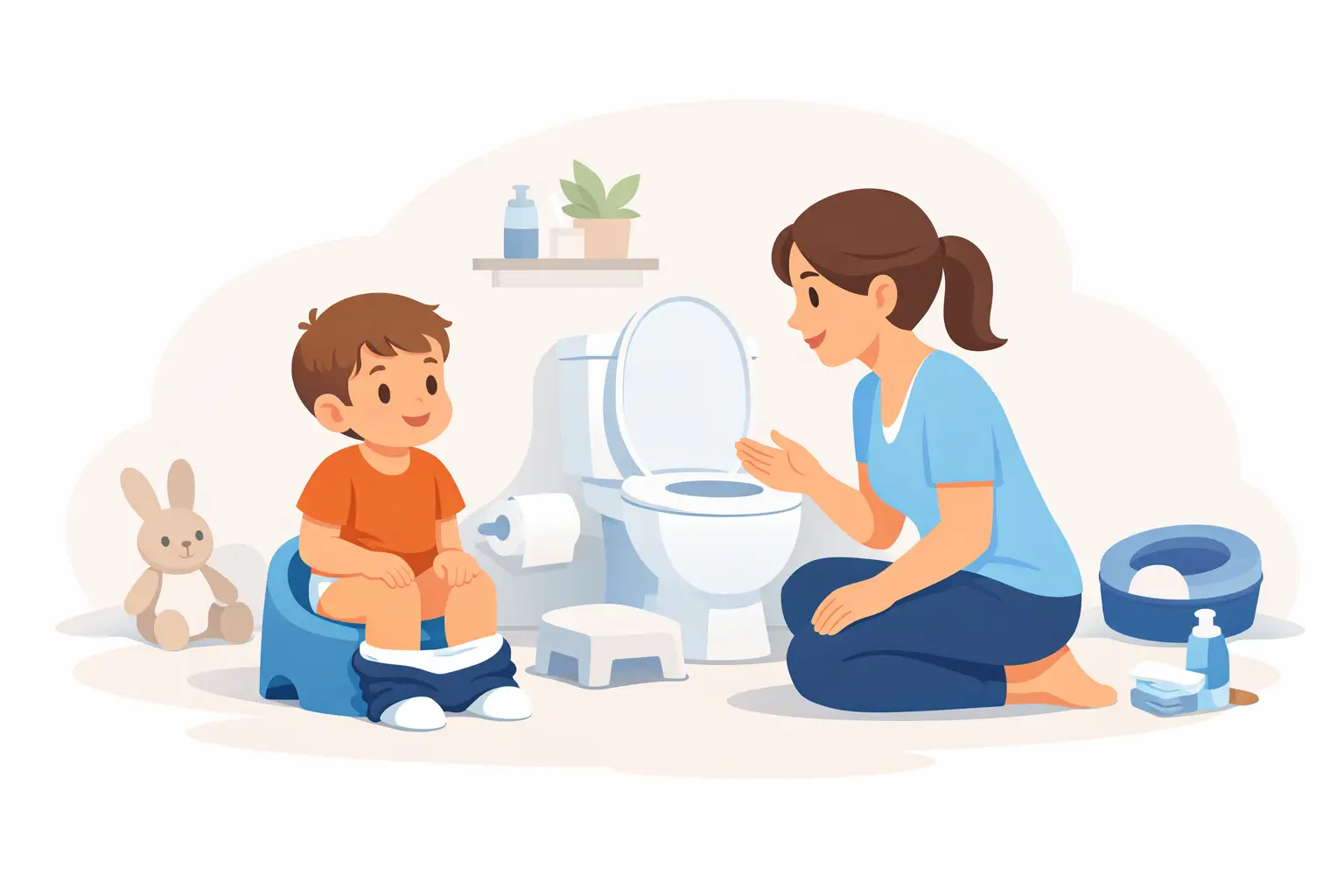
Start by letting your toddler get familiar with the potty or toilet seat insert before expecting much from it. Leave it in the bathroom or another easy spot. Let them sit on it clothed first, then with trousers and nappy off during normal nappy-change times. The first goal is comfort, not instant success.
Once they are relaxed, build toilet time into the day. Offer a sit after waking, before leaving the house, after meals, and before bath and bed. Those moments line up well with natural body rhythms, so you are more likely to catch something without creating a battle.
Dress them in easy clothes. Leggings, joggers and elastic waistbands are your friends. Dungarees, tight tights and fiddly fastenings are not. If getting to the potty takes too long, accidents will happen even when your toddler is trying.
It also helps to choose your language early and stick with it. Whether your family says wee, poo, toilet, potty, willy or vulva, plain words keep things clear. That matters more than people realise. Toilet training already asks toddlers to notice internal signals, stop what they are doing and move quickly. Simple language lowers the load.
What to say during toilet training
Parents often worry about saying the wrong thing, especially after accidents. The tone matters more than having the perfect script. Calm, matter-of-fact words work best.
When introducing it, try: “Your body is learning when wee and poo are coming. The potty is where they go now.” That frames toilet training as a skill, not a test.
When you see signs they need to go, say: “Your body looks like it needs a wee. Let’s get to the potty.” If they refuse, avoid turning it into a stand-off. You can say: “Okay, we’ll try again in a bit.” Repeated pressure often creates more resistance.
After an accident, keep it neutral: “Your wee came out on the floor. Next time we’ll try to get it in the potty.” If your child is upset, add reassurance: “Accidents happen while you’re learning.” Shame is memorable, and it can make children hold on, deny they need to go, or become anxious about poo.
Praise effort more than outcomes. “You listened to your body” or “You sat and had a try” is more useful than turning every wee into a grand event. Some toddlers love celebration. Others get overwhelmed by too much fuss.
Potties, toilets and training pants
There is no single correct set-up. Some toddlers feel safer starting with a small potty because their feet are on the ground and they can get on and off by themselves. Others want the real toilet from day one because it feels more grown up.
If you use the toilet, add a stable step so your child can climb up safely and rest their feet. That foot support matters, especially for poo. A child dangling above the seat often struggles to relax their pelvic floor, which can lead to withholding.
Training pants can be useful in the in-between stage, but they are not magic. Some feel enough like nappies that toddlers do not notice the difference. For other children, they are a helpful safety net for short outings. It depends on the child, the stage, and how much change your household can realistically manage at once.
The hard bit no one likes talking about – poo problems
Wees often come first. Poo can take much longer. Some toddlers are happy to wee in the potty but ask for a nappy to do a poo. Others start withholding because the sensation feels strange, they had one painful poo, or they simply do not like stopping what they are doing.
This is where parents can slip into pressure without meaning to. If your child is scared of pooing on the potty or toilet, slow down. Keep fibre and fluids up, and watch for constipation. Hard poos make everything harder. A child who expects pain will often hold on, and that can create a cycle that needs proper attention.
You can say: “Poo belongs in the potty. I’ll stay with you while your body lets it out.” Calm company helps. So does letting them plant their feet and lean forward slightly. If constipation or withholding is becoming a pattern, get advice from your GP or health visitor rather than hoping it will sort itself.
Night-time dryness is a different skill
This catches a lot of families out. Day training and night dryness are related, but they are not the same thing. Staying dry overnight depends a lot on physical development and hormone patterns, not just practice.
If your toddler is dry most mornings for a stretch of time, night training may happen naturally. If not, there is no prize for rushing it. Keep nappies or pull-ups at night without framing them as failure. A child can be fully toilet trained in the day and still need night-time protection for quite a while.
What if toilet training stalls?
Sometimes things start well and then wobble. Illness, travel, childcare changes, tiredness, constipation, a new sibling, or simple toddler bloody-mindedness can all knock things off course. That does not always mean you need to stop, but it may mean reducing pressure.
If your child is having multiple accidents a day and getting distressed, pull back for a couple of weeks. Go back to nappies calmly if needed and say: “We’ll try again when your body feels more ready.” That is not giving in. It is adjusting to the child in front of you.
If they are resisting only at nursery or only at home, talk with other carers and get the routine as aligned as possible. Mixed messages confuse toddlers. A shared plan usually works better than everyone trying their own version.
Common mistakes parents make
The biggest one is starting because you feel you should. Pressure from grandparents, nursery expectations or comparisons with other children can make parents push before the child is ready. That often drags the process out.
Another is asking too often. A toddler who hears “Do you need the toilet?” every twenty minutes may tune out completely. Offer routine sits instead of endless questions.
Then there is overreacting to accidents. Of course it is frustrating to clean wee off the sofa. But visible irritation can make a toddler anxious, and anxious children often either resist or withhold. Steady beats perfect here.
When to get extra support
If your child is over four and not making progress, seems in pain when weeing or pooing, has ongoing constipation, or suddenly starts having accidents after being dry, check in with a health professional. The same goes for very strong fear around toileting that does not ease with a slower approach.
Most toilet training bumps are normal. Some need more than patience. Knowing the difference is part of the job.
If your house is in the thick of it right now, keep your expectations low and your voice calm. Toilet training is one of those parenting jobs that feels endless until, suddenly, it is not.