

In this article
- Why does my child lie at all?
- What lying can look like at different ages
- The most common reasons children lie
- When lying is normal and when it’s a red flag
- How to respond when your child lies
- What to say when your child lies
- Why punishment alone usually backfires
- How to build a home where honesty is easier
- When to get extra support
You ask a simple question. Did you brush your teeth? Did you hit your brother? Did you finish your homework? And your child looks you in the eye and says no, even when the toothpaste is dry, the tears are fresh, or the worksheet is still in the bag. If you’re thinking, why does my child lie, you’re not overreacting. Lying can feel personal, worrying and, at times, infuriating.
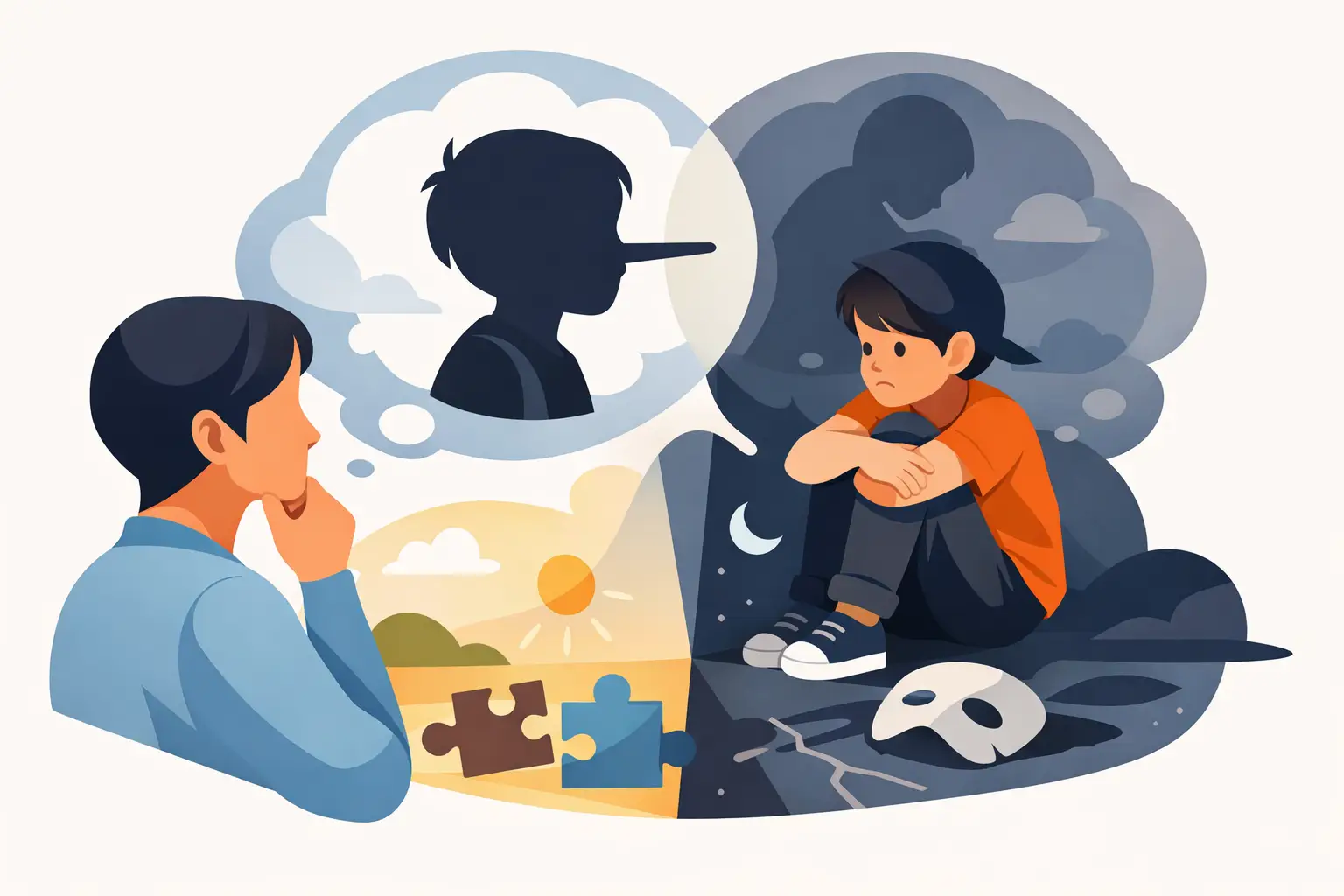
But most of the time, a child’s lie is not a sign you’re raising a dishonest person. It’s a clue. It tells you something about their development, their stress level, their fear of consequences, or their ability to handle the truth in the moment. That doesn’t mean you ignore it. It means you respond with a bit more strategy and a bit less panic.
Why does my child lie at all?
Children lie for different reasons, and the reason matters. A four-year-old who insists the broken lamp was knocked over by a dragon is not doing the same thing as a twelve-year-old who swears they weren’t on TikTok after lights out.
Young children often blur fantasy and reality. They may tell stories that sound like lies, but they are really experimenting with imagination, language and cause and effect. As children get older, lying becomes more purposeful. They may lie to avoid getting into trouble, protect someone’s feelings, gain attention, keep a privilege, or hold on to a sense of privacy.
Sometimes children also lie because they feel cornered. If the truth seems likely to lead to shouting, shame or a big reaction, a lie can feel like the safer option. It is still not acceptable, but it is understandable.
That’s the key shift for parents. Instead of seeing every lie as a character flaw, treat it as behaviour with a function. Once you know the function, you can deal with it properly.
What lying can look like at different ages
Toddlers and pre-schoolers
Very young children are not great at separating wish from fact. They may deny obvious things because they do not fully understand that you know what happened, or because they desperately want a different version of events to be true.
At this age, lying is rarely manipulative in the adult sense. It is more often a mix of magical thinking, impulse and a basic desire to avoid disapproval.
Primary school children
School-age children usually know the difference between truth and lies. They may start lying more deliberately, often to dodge consequences or save face. This is also the age when some children try out exaggeration, social lies and cover stories.
They might say they have no homework because they want more screen time. They might deny taking a sibling’s toy because they know the rules and want to escape the fallout.
Tweens and teens
Older children and teens often lie for more complex reasons. Yes, avoiding trouble is still part of it. But privacy, social pressure, embarrassment and independence also come into play.
A teen may lie because they feel judged, because they are trying to manage how you see them, or because admitting the truth would mean talking about something awkward, risky or emotionally loaded. That makes honesty harder, not less necessary.
The most common reasons children lie
Fear is one of the biggest drivers. If your child expects anger, punishment or humiliation, they are more likely to lie. This does not mean parents should have no consequences. It means consequences work best when they are calm, predictable and proportionate.
Some children lie because they struggle with impulse control. The lie comes out fast, almost before they have thought it through. This is common in younger children and also in some children with ADHD or anxiety.
Others lie to get connection or approval. They may brag, exaggerate or make things up because they want to feel interesting, successful or included. If a child feels they can only get positive attention by performing, honesty can start to feel risky.
Then there is shame. Shame pushes children to hide. A child who feels bad about what they did is often less able to admit it, especially if they already think of themselves as the one who always gets it wrong.
When lying is normal and when it’s a red flag
Most children lie sometimes. That is normal. It does not automatically point to deeper behavioural issues.
What matters is the pattern. If lying is frequent, elaborate, aggressive, or paired with little remorse, it is worth looking more closely. The same goes if your child lies across lots of settings, seems genuinely unable to tell the truth even when it would help them, or uses lying to manipulate and harm other people.
You should also pay attention if lying ramps up suddenly. A child who starts lying much more than usual may be under pressure, being bullied, struggling at school, anxious, or hiding something they do not know how to talk about.
In those cases, the lie is still not the whole story. It is often the symptom.
How to respond when your child lies
Start by regulating yourself first. If you go in hot, you raise the stakes. A child who is frightened will usually protect themselves, not suddenly become honest because you are louder.
State what you know simply. Try, “I can see the iPad was used after bedtime, so let’s talk about what happened.” That is more effective than a courtroom-style interrogation.
Then make honesty the easier path. If every confession leads to a massive telling-off, children learn to hide better. If honesty leads to a fair consequence and a chance to repair, they are more likely to try it again next time.
That does not mean there are no boundaries. It means the goal is truth plus accountability, not fear plus denial.
What to say when your child lies
The exact words matter. Accusing, shaming and labelling can harden the problem.
Try saying, “I’m not happy about what happened, but I do want the truth.” Or, “You’re not in trouble for telling me the truth. We do still need to sort out what happened.” Those phrases lower the emotional temperature while keeping your expectations clear.
If your child doubles down, avoid a power battle. You can say, “I think you’re finding it hard to tell me right now. I’m going to give you a minute, and then we’ll try again.”
If they admit it, notice that. “Thank you for telling me the truth. That was hard, and it matters.” You are reinforcing honesty, not rewarding the original behaviour.
Why punishment alone usually backfires
Harsh punishment can stop behaviour in the short term, but it often teaches children to get better at covering their tracks. If the lesson they take away is “don’t get caught”, you have not built honesty. You have built secrecy.
A better approach is a consequence linked to the behaviour, plus repair. If they lied about homework, they might need to complete it before screens and show you their school planner for the next week. If they lied after hurting a sibling, they need to make amends and rebuild trust.
The consequence should answer the real issue. What needs to be repaired? What skill needs more support? What boundary needs tightening?
How to build a home where honesty is easier
Children are more truthful when truth is safe and expected. That balance matters. Safe does not mean consequence-free. It means your child knows they can tell you difficult things without being humiliated.
Watch your own responses. If your child tells you something shocking and your first move is a lecture, they may think twice next time. If you can stay steady, even when the answer is not what you wanted, you create room for honesty.
It also helps to notice the small truthful moments. If your child admits they spilt the juice or forgot their reading book, respond with warmth and clarity. “Thanks for being honest. Let’s sort it.” That is how honesty becomes part of the family culture.
And be careful with labels. A child who hears “you’re such a liar” may start to wear it as an identity. Focus on behaviour instead. “You told a lie” is very different from “you are a liar.”
When to get extra support
If lying is affecting school, friendships or family trust in a significant way, it may help to speak with your GP, a school pastoral lead, or a child therapist. This is especially true if the lying sits alongside anxiety, aggression, low mood, attention difficulties or major behaviour changes.
Sometimes parents need support too, particularly if they grew up in homes where lying was heavily punished or where trust was repeatedly broken. Your own history can shape how intensely this behaviour lands.
There is no prize for handling it alone.
Honesty grows best in homes where children know two things at once: the truth matters, and they can bring it to you. If your child is lying, the job is not just to stop the lie. It is to teach them that facing the truth is something they can survive, and something your relationship can hold.